Why I Don’t Offer Group Classes Anymore
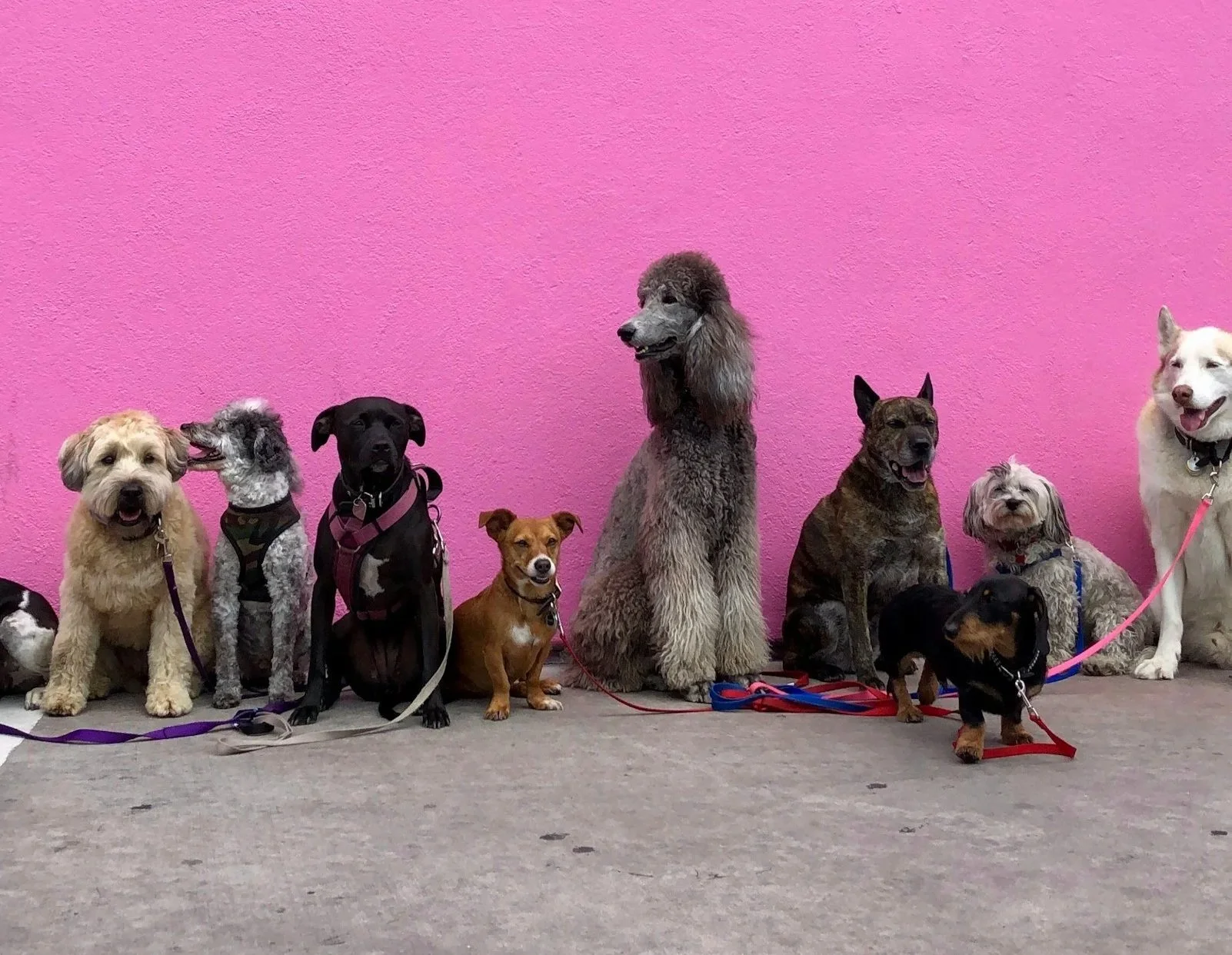
I was cleaning up my hard drive the other day and came across some old class photos. I miss working with a room full of dogs and people — but I don’t miss running group classes.
I ran group classes for years. I put a lot of thought into class size, curriculum, and structure. Over time, a pattern became hard to ignore: many of the problems people came to class for weren’t actually being solved there. Not because of curriculum or effort, but because the group class format didn’t line up with where behaviour happens, how dogs learn, or how things actually play out at home.
The Environment
Behaviour Doesn’t Happen in a Vacuum. Where it happens matters.
Group classes teach skills in a neutral, controlled environment. If dogs can perform those skills there, that doesn’t mean they can use them when real life shows up.
Behaviour is context-specific. Signing up for an obedience class doesn’t reliably address behaviours like jumping on guests, barking at strangers, or counter-surfing — because those behaviours don’t happen in a training room.
Those behaviours happen:
at the front door
on walks in the neighbourhood
in a kitchen or where human food is available
Emotions Drive Behaviour
Dogs don’t behave based on what they “know.” They behave based on how they feel.
Learning requires a dog to feel safe enough to think, process, and take in new information. Emotions like excitement, fear, frustration, or overwhelm directly affect a dog’s ability to do that. Even if a dog looks “fine,” they may be spending most of their energy coping — and coping isn’t the same as learning.
Even when a dog has learned a skill in a class environment, they often lose access to it when emotions change and triggers show up at home or on a walk. How a dog feels in the moment directly affects what skills they’re able to access.
It’s the same for people. When you’re nervous or overwhelmed, even simple tasks — things you normally do without thinking — can fall apart.
Skills Often Fall Apart at Home
One of the most common frustrations I hear is: “He does it perfectly in class — but he doesn’t listen at home.”
Behaviour is deeply tied to environment and emotional state. What feels easy in a quiet, structured training space doesn’t automatically carry over to a busy household or a real-world walk. The context changed — and with it, the dog’s understanding of what’s being asked.
Group classes also rely heavily on between-class practice. That practice matters. It’s how skills are reinforced and generalized beyond the classroom. But when it doesn’t happen — or doesn’t happen consistently — progress stalls.
And that’s often for very real reasons: busy schedules, mental load, competing responsibilities, multiple dogs, or simply not knowing how to recreate the setup at home. A lot of group class environments are hard to replicate once you’re back in real life. Going home feeling insecure because everyone is doing great in class doesn’t help either.
What bothers me most is what happens next. People feel discouraged. They start to think they’re doing something wrong, that they’ve failed, or that training itself doesn’t work for their dog. Going home after watching other dogs “doing great” doesn’t help either. Many people quietly give up — not because they didn’t care or didn’t try, but because the system wasn’t designed to support follow-through outside of class.
Expectations vs. Reality
Group classes have traditionally been seen as affordable, quick solutions — and that’s completely understandable. People sign up hoping to fix things like jumping, pulling, or listening better at home.
The problem isn’t in the goals. The goals make sense. The problem is that behaviour change doesn’t follow a fixed 4- or 6-week timeline or a set curriculum.
Group classes tend to attract transactional expectations: “If I attend the class, the problem should be fixed.” But behaviour change is a process, not a product — and it needs to be shaped around the dog, the environment, and the household, not the calendar.
Dogs need individualized exercises, flexible setups, and training that extends into their real lives.
People need coaching, not choreography — space to ask questions, make adjustments, and build confidence along the way. Even with really small class sizes, I felt as though I was constantly falling short of providing that.
You Get What You Pay For
From the outside, it makes sense. A set number of weeks, a lower price point, and a clear structure feel predictable and manageable. Private training can look more expensive by comparison — especially when the outcome isn’t tied to a fixed number of sessions or a guaranteed timeline.
The problem is, group classes and private training aren’t interchangeable — they support different types of learning, different dogs, and different goals.
$200 for a 6-week obedience class looks good on paper — especially if you’re dealing with a specific issue and want it fixed.
But here’s what that typically includes:
a fixed curriculum
a shared training space
limited individual feedback
no personalization for your home or neighbourhood
no follow-up outside of class
no written plan, videos, or ongoing support
Now compare that to a $125 in-home behaviour consultation which includes:
one-on-one time focused on you and your dog
training in the environment where the behaviour actually happens
personalized strategies based on your dog’s history, emotions, and triggers
hands-on coaching, written notes, resources, and next steps
additional sessions built around progress, not a preset schedule
These aren’t interchangeable services. They’re designed to do different things.
A group class is cheaper because the work is shared and standardized. Private training costs more because it’s individualized, contextual, and designed to carry into real life.
When people compare price alone, it can look like private training is “more expensive.” When you compare what you’re actually paying for — and what problem it’s meant to solve — the math changes.
Anyway — The Point Is
I didn’t stop offering group classes because they were inconvenient or unpopular. I stopped because they weren’t the most effective way to help the dogs and people I work with.
For the kinds of challenges most dogs are dealing with — and the lives people are actually living — individual, real-world support simply works better.