Dog-to-Dog Communication
Dogs communicate with each other constantly—but their conversations are subtle, fast, and easy to miss. Small shifts in posture, eye contact, movement, and space can completely change the tone of an interaction.
Here I break down real moments between dogs so you can learn to “read the room.” Each clip shows a short social exchange — tension, release, negotiation, pressure, or invitation — often moments people miss in real time.
Approaches & Invitations
Hazel is lying on her bed with a chew when Ella approaches to investigate. Hazel first shows calming — squinting and relaxed stillness — indicating she wants space.
When Ella continues to move in, Hazel gives a brief warning: a sharp movement paired with a low growl while turning away.
Ella looks away and walks off, followed by a tongue flick. The boundary was clear — and respected.
A Closed Mouth
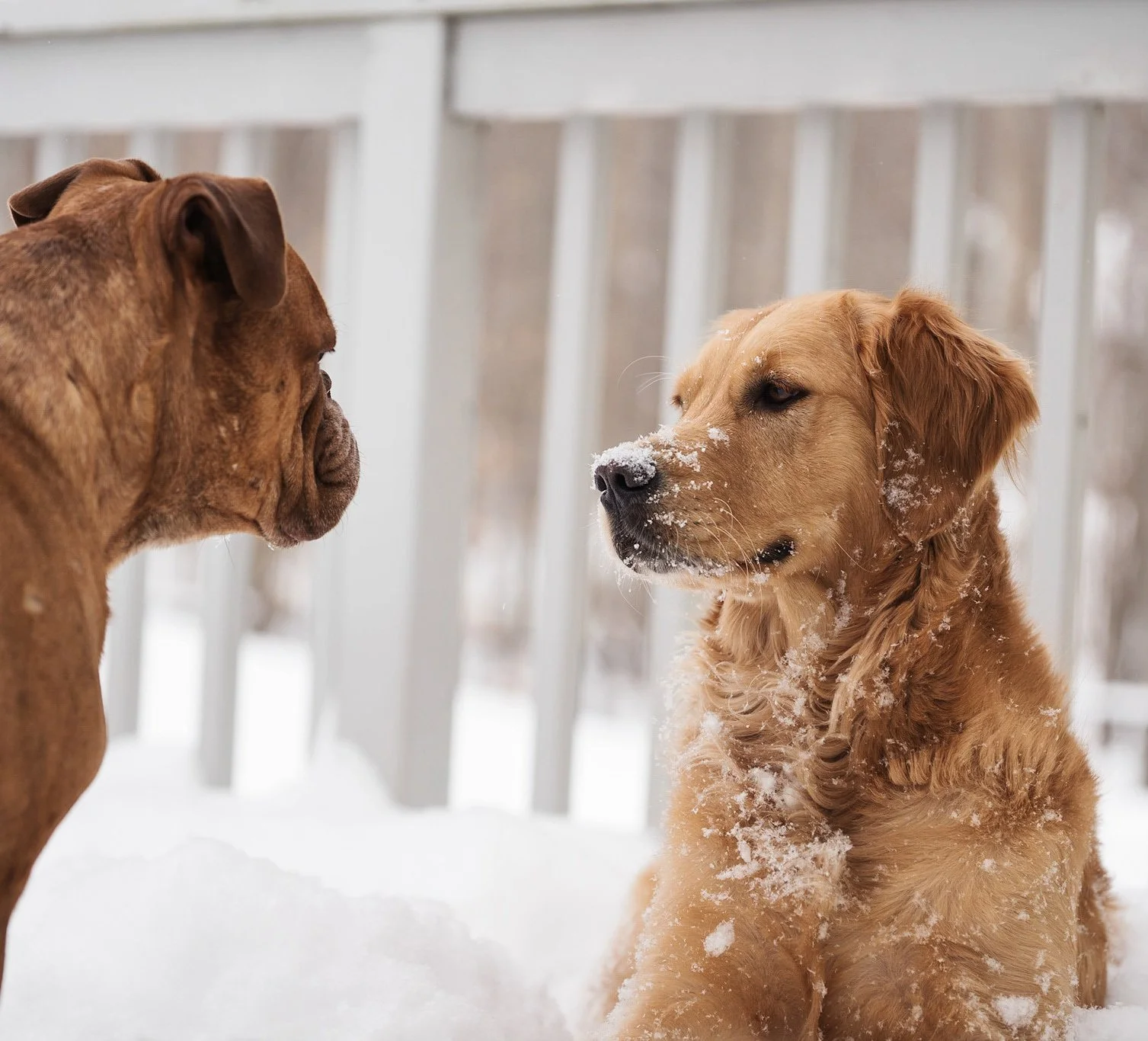
Closed mouth can signal a shift in tone during dog-to-dog interactions.
In relaxed moments, you’ll often see loose lips or a slightly open mouth. When the mouth closes—especially during an approach—it can mean the dog is assessing, holding tension, or becoming more deliberate in their movement.
It doesn’t automatically mean conflict.
But paired with stillness, direct orientation, or reduced movement, it’s worth paying attention.
This is often a “wait and see” moment—where the interaction could stay neutral, de-escalate… or tip the other way depending on what happens next.
Avoidance & Disengagement
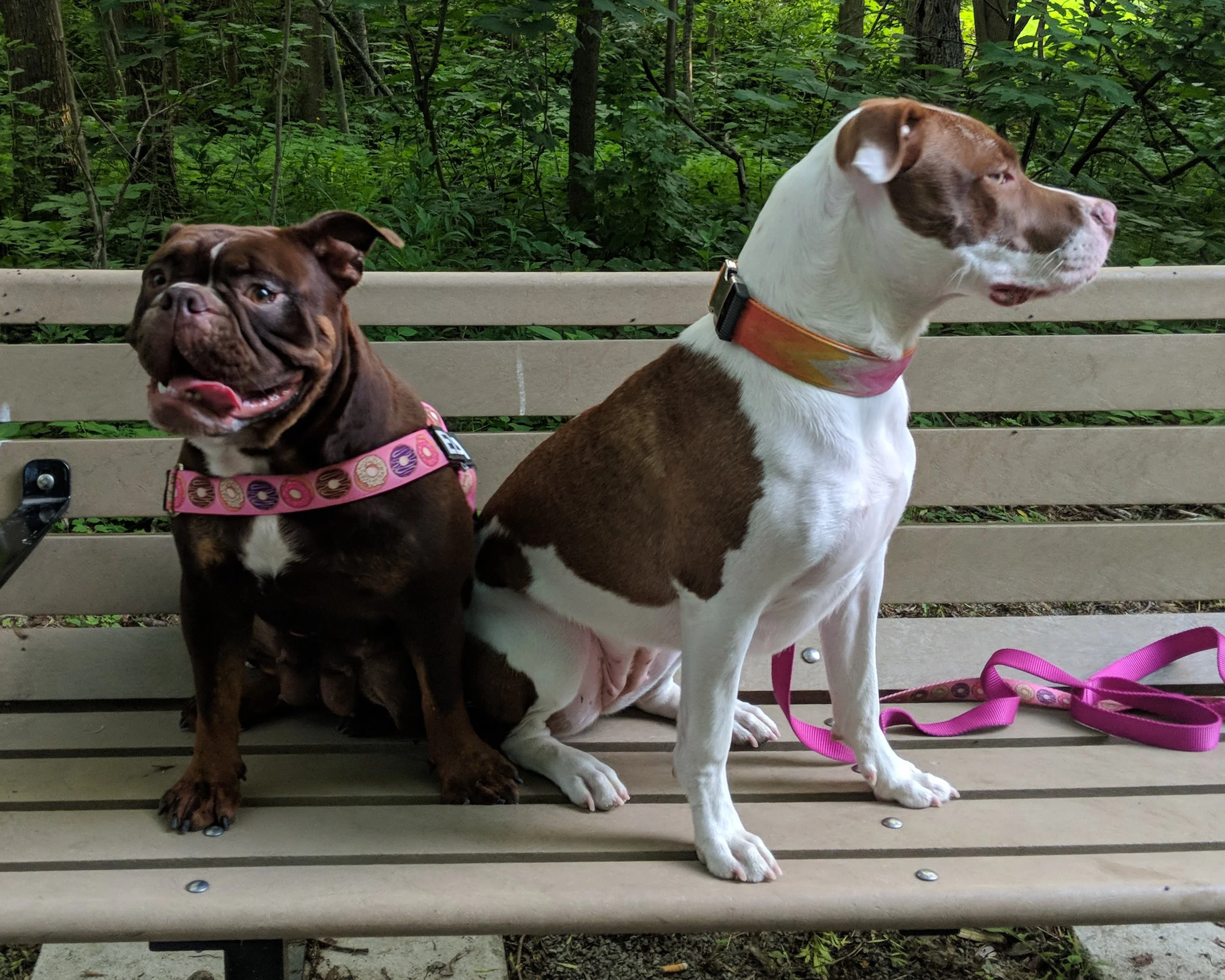
Leaning Away
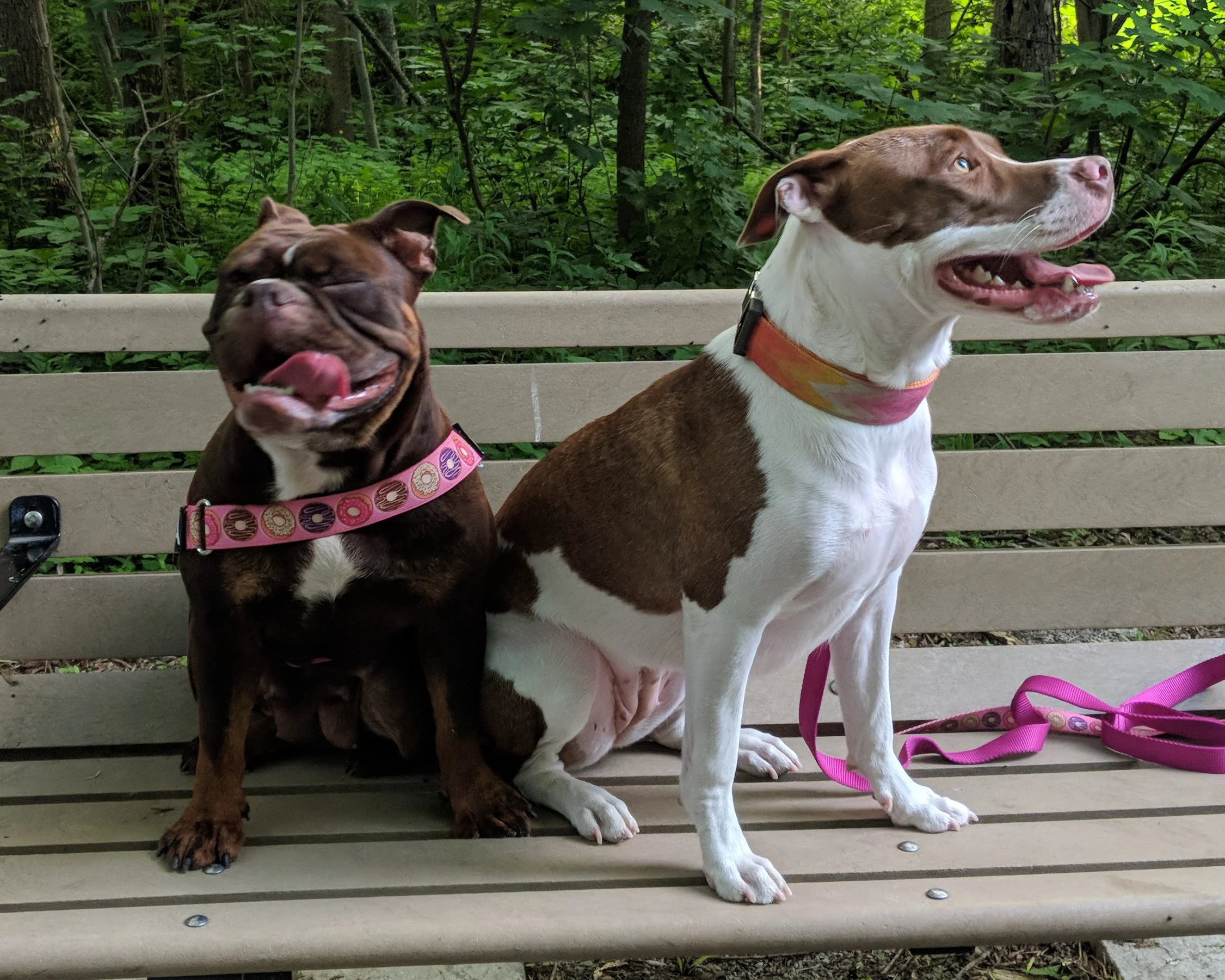
Ella shifts her weight and angles her body away. The brown and white mirrors that posture but she is focused on something in the distance.
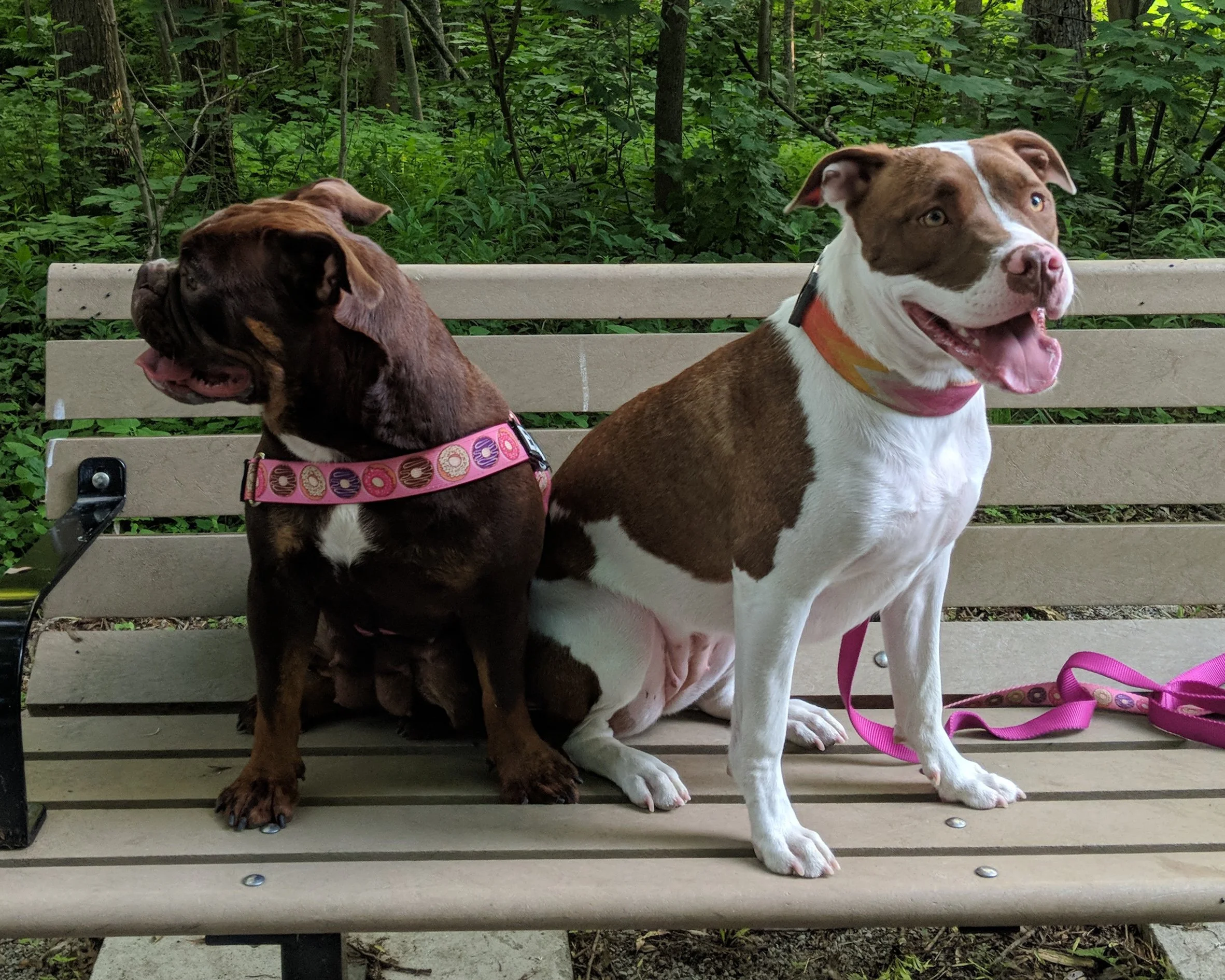
Looking Away
As the brown-and-white dog shifts her focus back and her head turns toward Ella, Ella turns her head too and looks away.
Why is this happening?
These dogs don’t know each other well and have been asked to sit close together for a photo.
When dogs feel a bit of social pressure, they often use small signals like turning their body away, looking away, or licking their lips. These behaviours help them communicate that they’re uncomfortable and would prefer a little more space.
Signals like these help reduce tension and prevent conflict, allowing dogs to navigate interactions without escalation.
Lip Lick
Ella’s head remains turned away and she does a lip lick.
A One-Sided Teenage Love Story
"Nah, I'm good."
He moves into Hazel’s space — right into her face.
His movement is springy and bouncy, with most of his weight still in his hind end.
Hazel meets him with a direct, hard look — tension in her eyes, a bit of whale eye.
Her body is braced and still — not loose, not playful.
"You're doing too much."
Now he’s right up in her space — head and muzzle near her face.
Hazel keeps that same hard expression and begins to turn away.
Her body angles out, but her eyes stay on him.
He reaches in again — still leaning away slightly himself, but not backing off.
"It’s giving …desperate."
He’s not taking the hint — nose right into her ear. Classic courting move.
Hazel’s face softens briefly when he pauses his movement.
Then he changes tactics — dropping into a play bow and avoiding direct eye contact.
What’s Happening?
"Respectfully, no."
He hasn’t passed the vibe check.
Hazel sits. Upright. Still.
She stares directly at him — ears pinned back, mouth tight, lips slightly pulled back.
No escalation. No Aggression.
Just: that’s enough.
Dogs often use close, face-to-face contact during social interactions — including when flirting, like this intact adolescent male Vizsla is doing with Hazel. These two are just a few months apart in age, and he is smitten.
As we hiked, they played and ran around. His mum knows him well and stepped in to call him away when Hazel needed a break. Because for young males in this scenario, their biologically driven brain can take over — and their ability to remember their training tends to go out the window.
This kind of behaviour can look a lot like play. But when you factor in the context, this is courting behaviour.
What matters is how the other dog responds.
Even when interactions stay quiet and don’t escalate, there’s a lot being communicated in small changes — posture, eye contact, movement, and how each dog adjusts (or doesn’t) to the other.
Before the Greeting
Play Standing Upright
Chest-to-Chest Contact
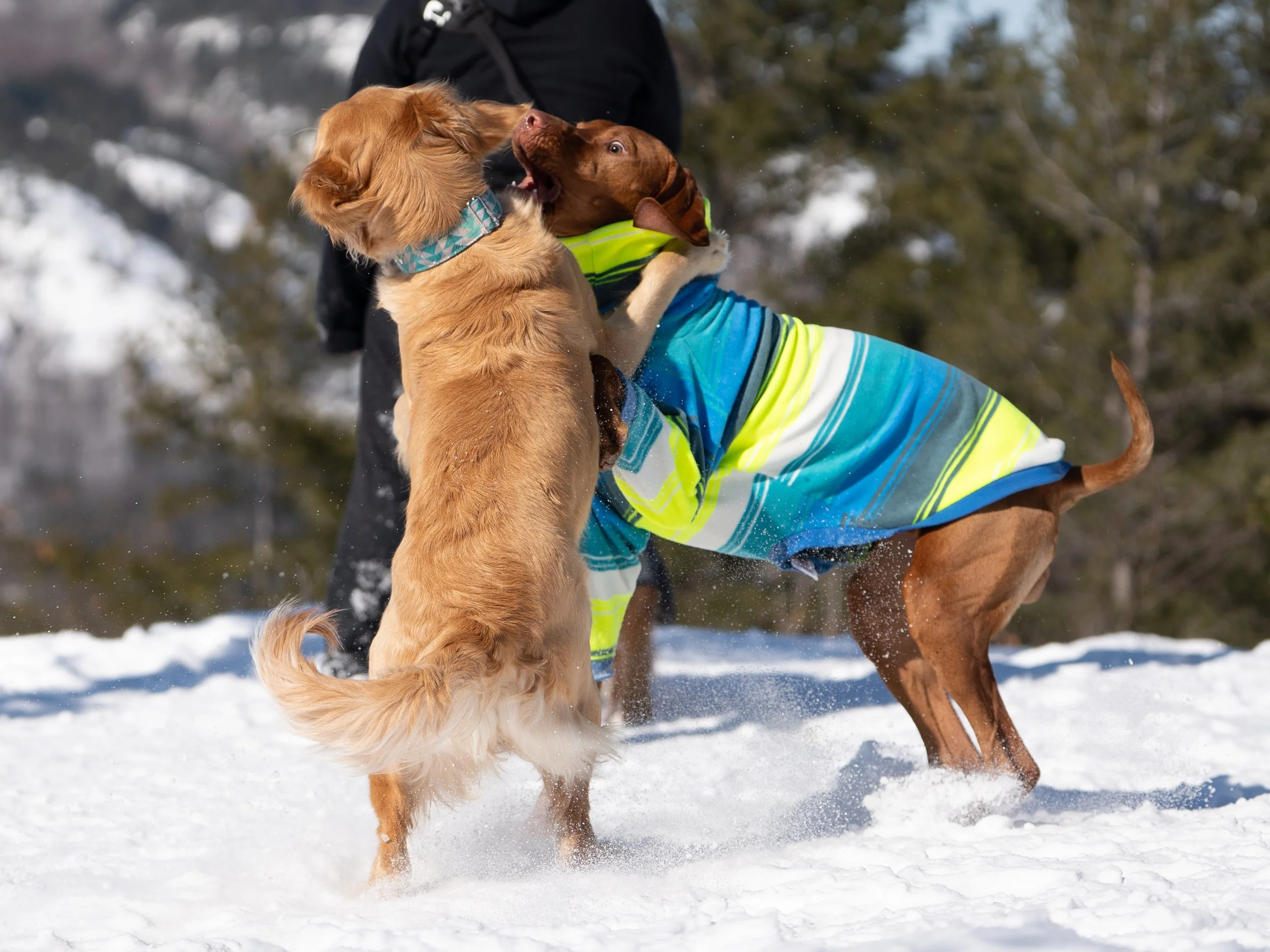
Controlling Space
The interaction stays very close, with mouthy contact around the face and collar area.
Hazel uses her front paws against the other dog’s shoulders to keep him at bay.
Is this healthy play?
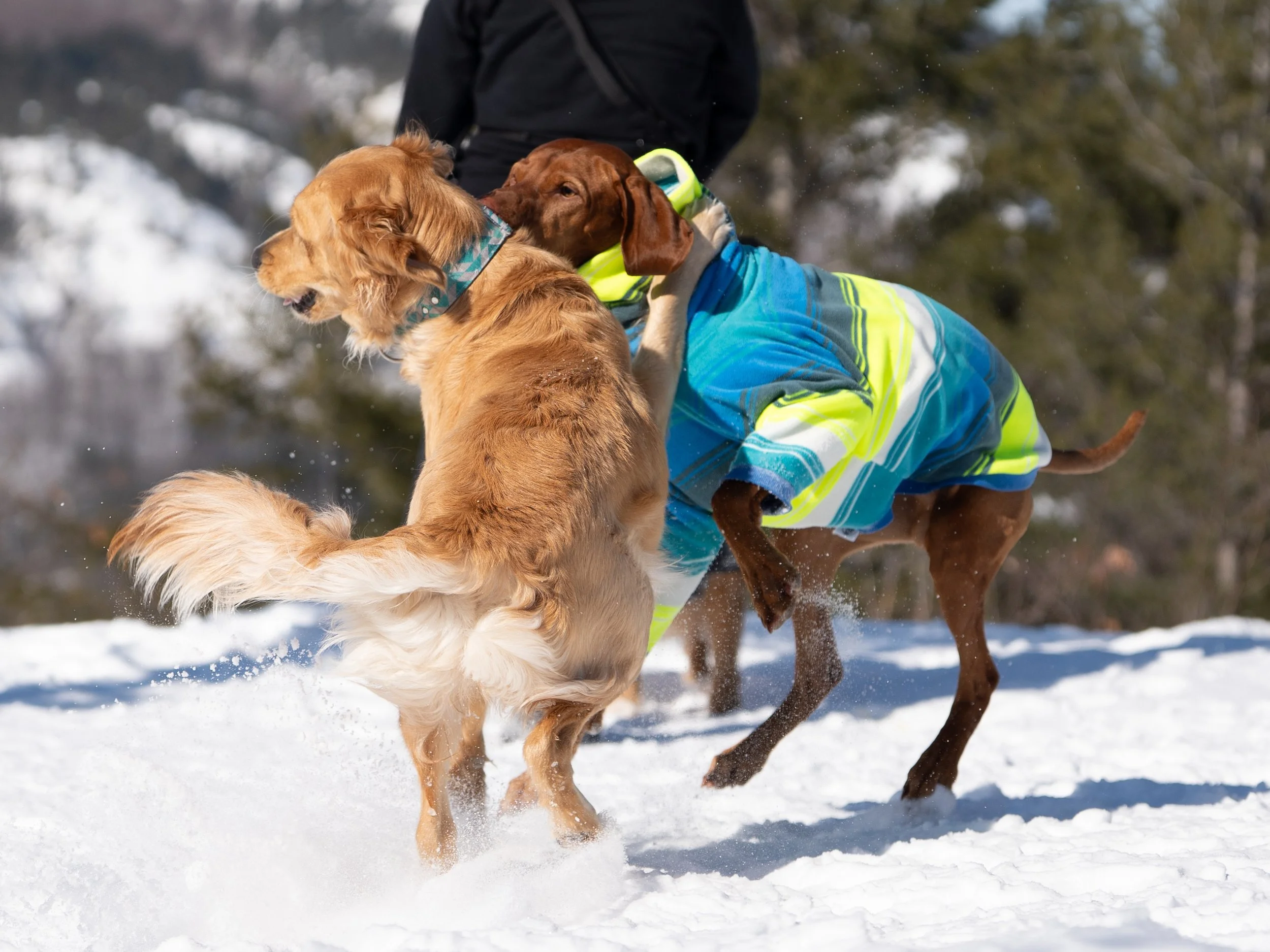
Both dogs come up onto their back legs and make direct chest-to-chest contact.
Hazel’s front paws make contact with his shoulders/neck. She’s turning away from him.
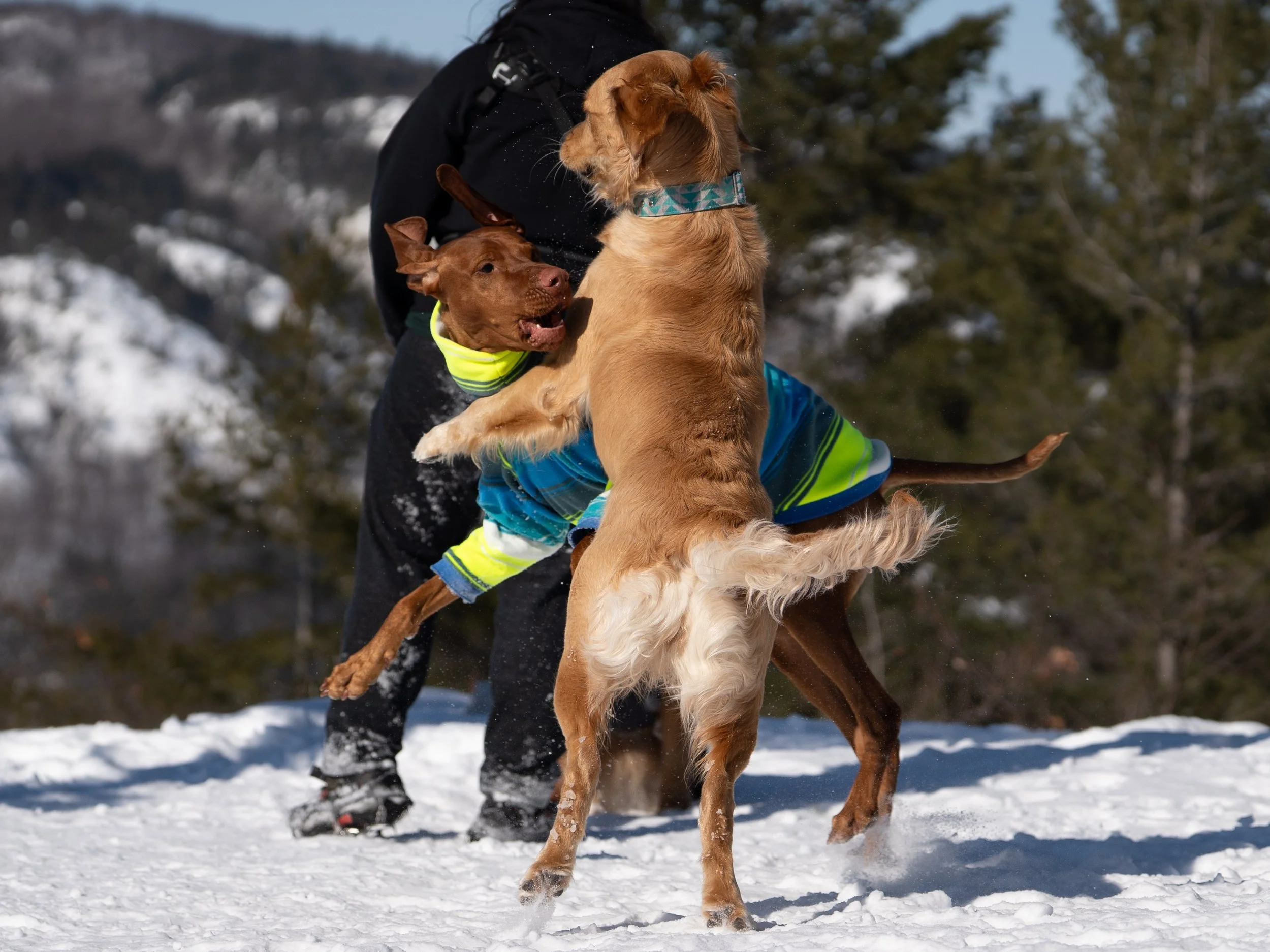
Tension & Orientation
Hazel now turns to face him, body is stiff, mouth tense. She holds her position as she manages the interaction.
More often than not, this type of upright play isn’t considered “good” play. Coming up onto the back legs with front paws on the shoulders tends to happen as arousal increases. It’s intense and physically demanding, with less space for either dog to move or disengage.
In this interaction, Hazel is doing more of the work. She uses her body, front paws, and positioning to manage distance and control how close the other dog gets. You can see her shifting between turning away and facing him — adjusting moment by moment to keep the interaction from escalating.
The other dog continues to move in and maintain close contact, which increases the intensity and makes it harder for Hazel to step out of the interaction.
Hazel is still participating — but her body language shows she’s not having fun.
This kind of interaction can be social and appropriate, but only when it’s brief, both dogs are equally engaged, taking turns, and able to move in and out of it freely.
What matters isn’t just that the dogs are playing — it’s how much effort each dog is putting into keeping that play comfortable.
What Happens Next
Keeping Him At Bay
Intensity is still high as they come out of upright play.
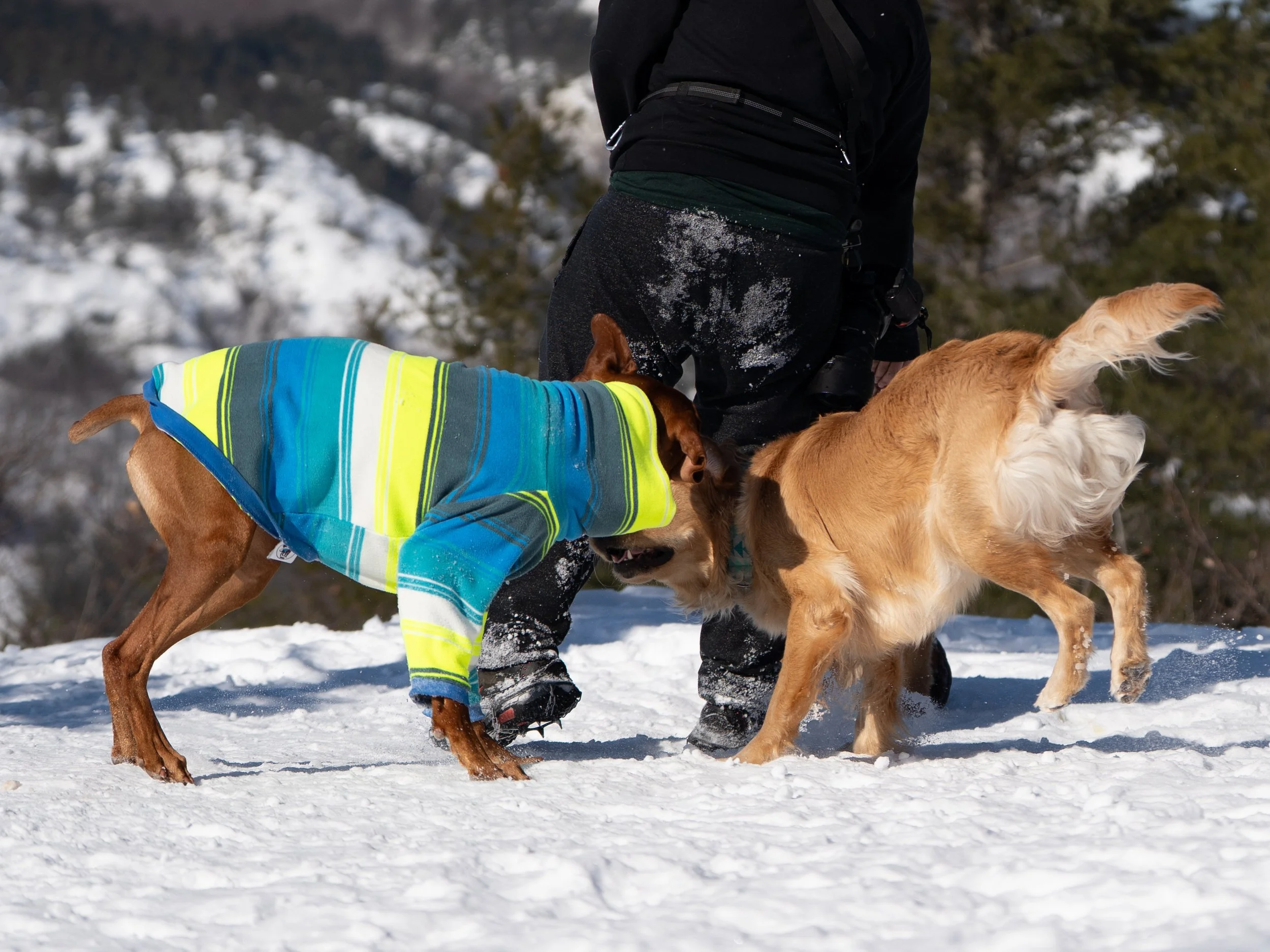
Moving Away
Walter stays close, continuing to pursue Hazel with face and neck mouthing.
Hazel is trying to create space by moving her hind end away.
What’s Happening?
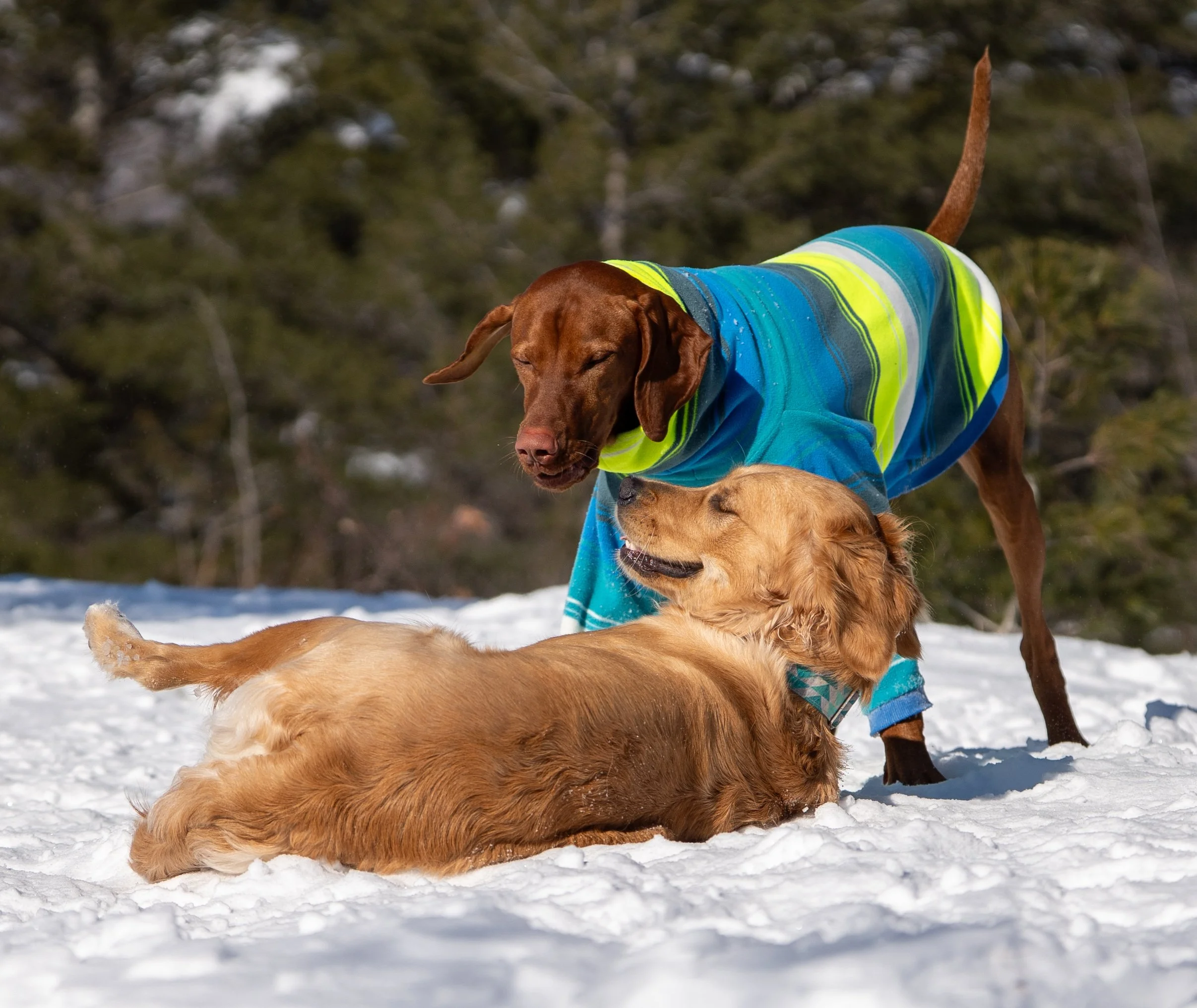
Rolling Over
Finally Hazel rolls onto her back and turns her away— a clear attempt to reduce pressure and ask for space.
This is how that interaction continues— and how we can see that this is not balanced play.
The interaction becomes more about maintaining contact than taking turns.
The Vizsla keeps pursuing Hazel, his focus on her face and neck.
Hazel starts trying to create space by hopping her hind end away and keeping her head low to avoid that contact.
By the final frame, Hazel rolls onto her back.
If you’re into the dominance stuff, you’re probably thinking Hazel is being “submissive.”
While that might be technically true in a very broad sense, it’s an oversimplification that puts him in a “dominant” position — with aggressive undertones. Not helpful.
A dog rolling onto its back during an interaction like this is a distance-increasing behaviour used to de-escalate and signal that they want space.
In healthy play, this is typically where you’d see a pause or a role reversal.
Play & Social Skills
Watching dogs play is fascinating once you know what you’re looking at.
Dogs use body language and signals to slow things down, speed them up, and manage space with each other. Movement, pauses, role shifts, and subtle signals all influence how the interaction unfolds.
This page breaks down what to look for — so you can see when play is balanced… and when one dog is doing more of the work.
Downloadable resources to support your understanding of dog-to-dog communication and play behaviour.
Printables & Training Tools
Healthy Play
A two-page visual guide outlining what healthy play looks like, including role reversals, pauses, self-handicapping, and how dogs communicate consent and comfort during interactions.
Puppy-Adult Dog Play
A short guide to how puppies learn social skills through interactions with adult dogs — including what adult dogs can (and can’t) teach, what puppies are learning in real time, and the role humans play in supporting safe, flexible interactions.