Retractable Leashes
What You Should Know Before Using One
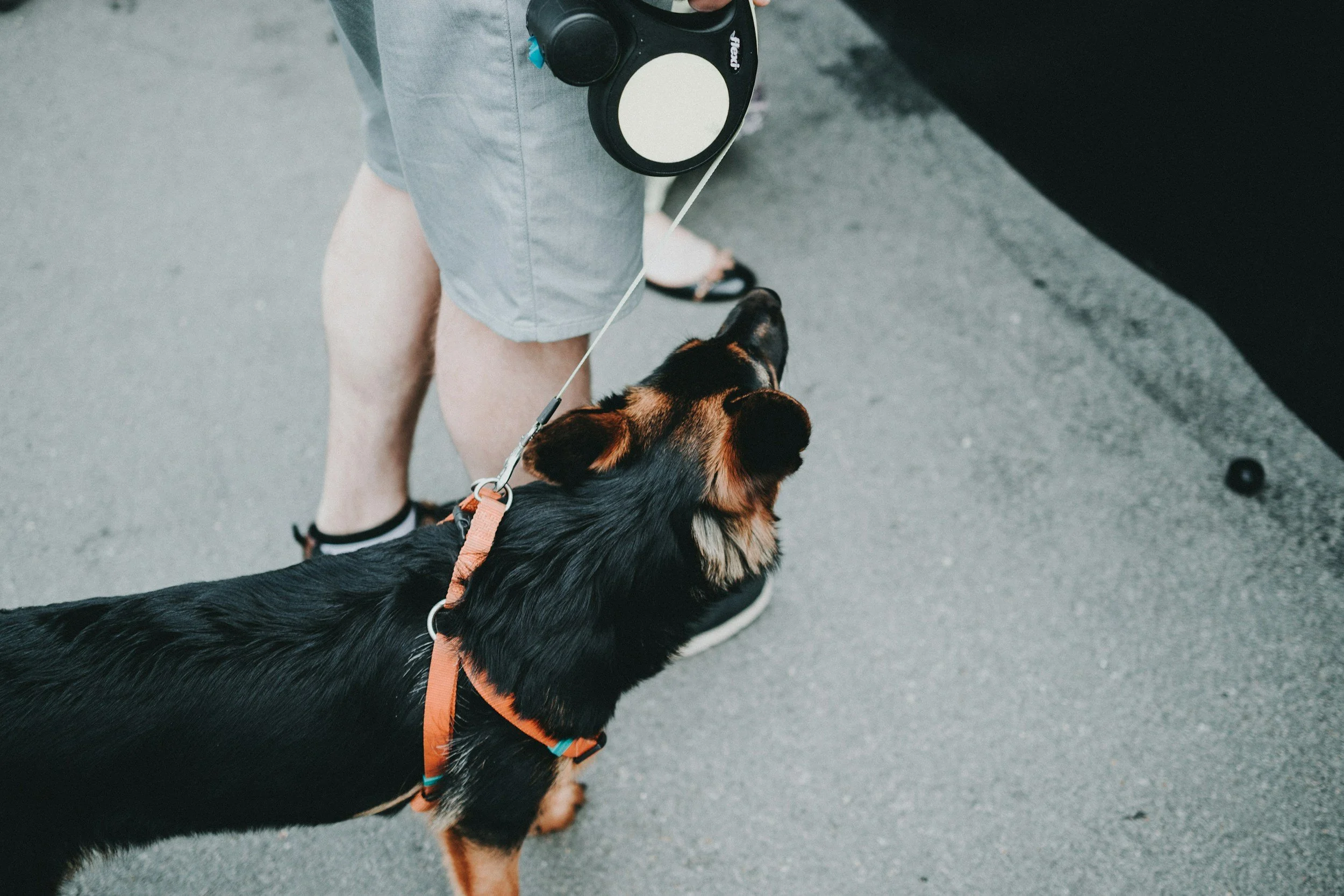
Retractable leashes are a hot topic — some people love ‘em, some people hate ‘em. Before you clip one on, it’s important to understand the risks and whether it’s the right choice for your puppy or dog.
What is a Retractable Leash?
A retractable leash has a long spool of tape or cord coiled within a plastic handle. When a dog pulls on the leash, the tape unspools and will only retract when there is slack. You can use the lock or brake button to lock the length of the tape or cord.
What’s to love about them
Retractable leashes give dogs more freedom to sniff and explore on walks. They’re easy to use, to store and they don’t start to stink like nylon leashes. The really enticing feature is that there’s no extra leash length to gather up as there is with a long line.
The Downside
Much of the criticism around retractable leashes comes from how they’re used — letting dogs run across people’s lawns, into the street, or up to other dogs or kids — especially in busy areas. This isn’t a problem with the leash itself as much as it is a handling problem. Just like off-leash dogs where they don’t belong, this isn’t just inconsiderate — it’s unsafe.
Even when no one is being careless, retractable leashes come with other safety risks that are easy to underestimate.
Injury Risk: The cord can cause serious burns, cuts, and even amputation if it wraps around a human or dog’s body part.
Neck & Spine Injuries: Hitting the end of the leash at full speed can cause severe muscle strains, trachea damage and even spinal injury—especially if your dog is wearing a collar instead of a harness.
Locking: If you’re not paying attention to leash length or locking it at the wrong moment (like while your dog is running), it increases the risk of injury.
Breakage & Malfunctions: Any leash can break, but retractable ones have more moving parts, making them more prone to failure.
Dropping The Handle: The handle is made of hard plastic. If it hits the ground, it’s going to chase the dog. That can easily send them into a panic and they could get lost or run into traffic.
Aside from the safety issues, there are training and control issues to contend with.
Lack of Control: When the dog is out at the end, it makes it very difficult to manage sudden movements or avoid hazards. Unlike a regular leash, you can’t simply guide them back to you.
Constant tension: Makes teaching loose leash walking a really big challenge because the dog is encouraged to pull. This makes it harder for dogs to respond to leash pressure on a collar or harness — something we rely on when teaching loose leash walking.
If you’re team retractable...here’s what I recommend
Don’t start your puppy on a retractable. Teach them to walk on a loose leash with a regular leash or long line first.
Only use with dogs who have solid recall skills. In case something happens, and to compensate for the lack of control.
Choose a flat nylon ribbon over a thin cord—it’s stronger and safer.
Keep it locked in busy areas and never let the leash extend near other people or dogs.
Always carry a backup leash.
There are safer alternatives that still provide freedom for the dog and convenience for the handler.
Long-Line/Training Leash: Great for recall practice while staying safe.
Hands-Free Leash: Ideal for active owners who want security and freedom at the same time.
The Bottom Line
Retractable leashes might work for some, but they come with risks that can be avoided by using a safer alternative. If you do use one, do it responsibly to keep both you and your pup safe.