Training With Distractions
Why Skills Don’t Transfer Automatically From One Place to The Next
“My dog does it perfectly at home — but as soon as we step outside, he won’t listen.”
This is one of the most common complaints I hear, and it’s a big reason people give up on training altogether.
And I get it. It’s frustrating. It feels personal. But your dog isn’t being “stubborn,” they’re not trying to dominate you, and it doesn’t mean you’ve messed things up or need to start over.
Dogs Don’t Just Learn Words
Dogs don’t learn cues in isolation. The words we say — sit, stay, leave it — are only part of the picture.
Take sit as an example. Yes, puppies learn early on that when a human says “sit,” putting their bum on the floor often means food will follow. But how they learn it matters too.
For most dogs, sit also means:
doing it right in front of the person
facing them
responding to their body position
Try this: stand at your kitchen table or island and say “sit” while your dog is across the room. Chances are they’ll either look at you like “huh?” and go back to what they’re doing — or, they’ll get up and walk over to you before that bum starts heading toward the floor.
That’s how your dog understands that cue. Your dog is doing what makes sense based on how they learned what “sit” means.
What Matters… and What Doesn’t
Dogs learn what’s important through a combination of:
your words
your body language
the environment
But just as importantly, they also have to learn what doesn’t matter. All the background information that needs to be tuned out in order to get it right.
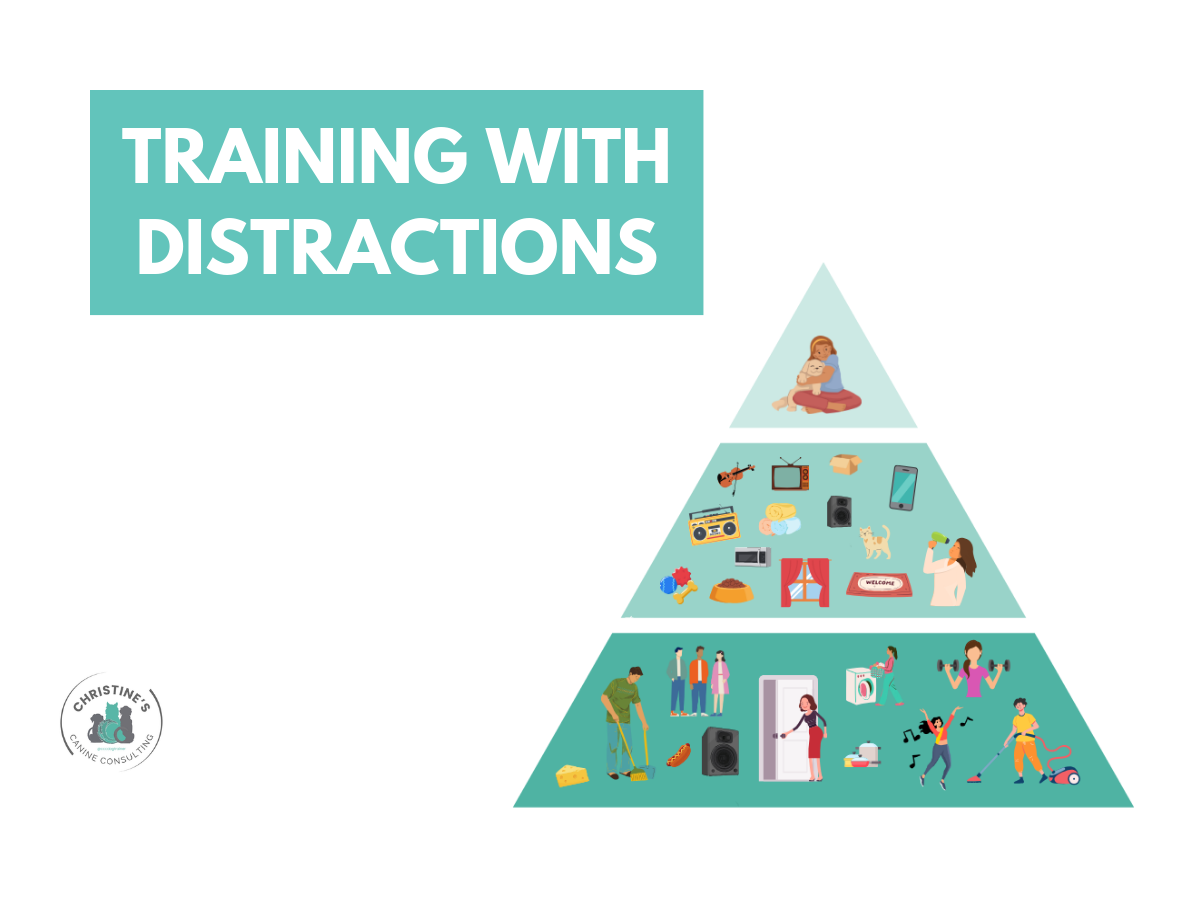
When trainers talk about “distractions,” we’re not just talking about noise or movement. We’re talking about everything in the environment that competes for your dog’s attention, processing, and emotional bandwidth.
Distractions Work Like a Camera Lens
Think of distraction levels like a camera lens.
When you’re zoomed in, it’s easy to focus. You see only what’s relevant to the task at hand.
As you zoom out, more of the background comes into view. Sights, sounds, movement — all of that sensory input starts competing with focus.
Your dog isn’t ignoring you. There’s just a lot of information to process.
Think Smaller Than You Think You Need To
One of the most helpful shifts you can make in training is learning to think smaller.
Before asking for skills in new environments, aim to truly “zoom out” within familiar ones first.
Even in a small home, think in sections:
start in the living room
zoom out to include the kitchen
then a hallway or bathroom
then bedrooms or laundry rooms
When your dog can stay, come, or leave it in every part of the house, you’re ready to move outside.
But don’t jump straight to the yard, the street, or the park.
Start with:
the front step or walkway
the driveway or parking lot
the space immediately in front of your building
If you have a backyard, treat it the same way:
outside the doorway
the deck
then the yard — broken into sections if needed
What Changes Outside
As you move into new environments, distractions change what your dog can notice and respond to.
People. Animals. Vehicles. Sounds. Smells. Movement. How often your dog has seen these things — and how they feel about them — all matter. A lot.
Your dog is learning:
what’s important
what’s safe
what should be avoided
And you’re there to guide that learning.
When Things Fall Apart, Zoom Back In
If you’re out in the world — or even at home — and your dog starts to struggle, pause and look around.
Are there too many things going on? New or unpredictable activity? What is your dog’s behaviour telling you about how they’re feeling?
That’s your cue to zoom back in.
Quiet the noise. Take a step back. It isn’t going backwards or failing somehow— it’s making sure your dog is ready for more.
You’re not starting over. You’re just adjusting the environment so that your dog can succeed. That’s not failure — that’s smart training.