When A Cue Becomes A Conversation
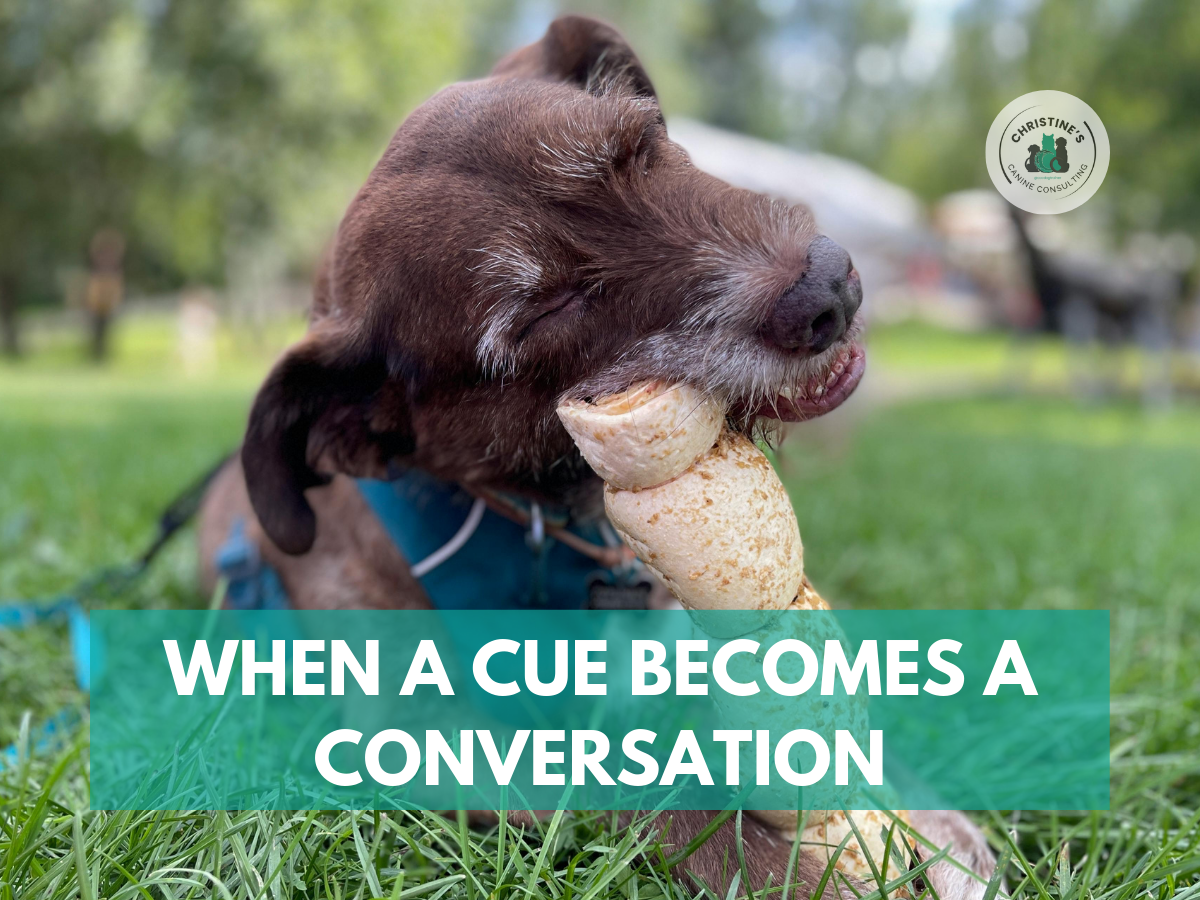
Ella was walking up the stairs in front of me, struggling to carry a giant chew.
I reached out and asked her to drop it so I could carry it the rest of the way for her.
She paused. Suspicious. But she did it anyway.
I handed it back to her. She took it, looked at me, and walked off — her way of acknowledging the gesture and, I’d like to think, thanking me for it.
Life with dogs isn’t a one-way conversation. When everything is framed as commands instead of cues, you miss out on an entirely different level of relationship with your dog.
Cues create conversation.
I used “drop it” to help her out — not because she had something I don't want her to have.
From a training perspective, “drop” is something Ella knows isn’t always a bad or permanent thing. She’s been reinforced enough for dropping items that she trusts she’ll get them back.
I can’t explain to her, “Let me carry that for you.”
So I use a behaviour she already understands — “drop” — to ask her to let me help.
That’s the thing about training. When you stop seeing it as a way to get obedience or control outcomes, it becomes a two-way conversation — and that changes the relationship you have with your dog.