Play & Social Skills
Play between dogs isn’t just about having fun — it’s communication in motion.
This page breaks down what play actually looks like, how dogs negotiate space and pressure, and what to watch for as interactions shift.
Because it’s not just are they playing — it’s how they’re playing, and whether both dogs are still choosing to be there.
Play Negotiation
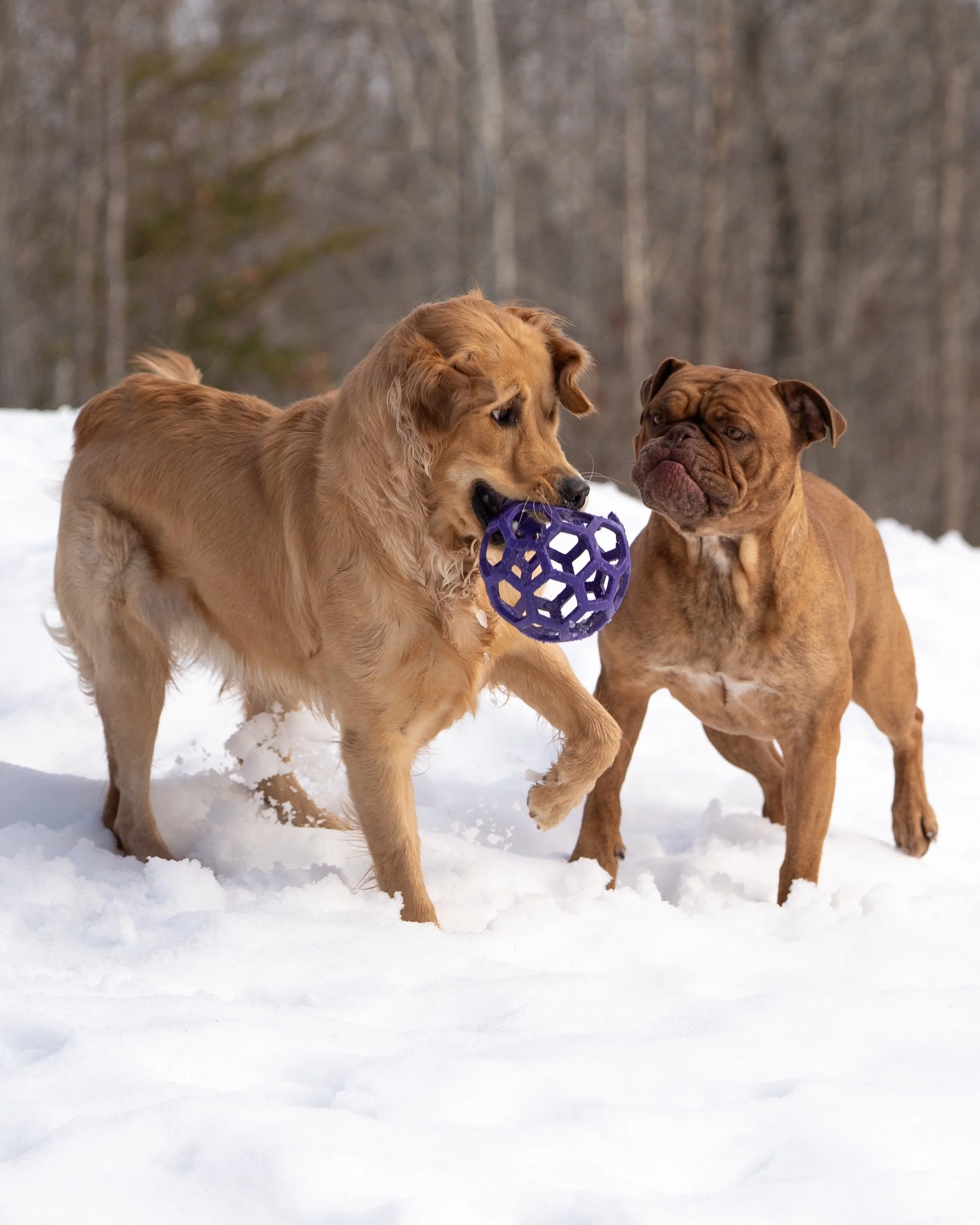
Watching the Toy
Lucy focuses on the toy while Hazel keeps possession. Dogs often pause like this during play to watch each other and decide whether to chase, grab the toy, or wait for the next move.
Turning Away With the Toy
What’s happening here?
Toys can add a bit of social pressure during play. When one dog has a toy and another dog shows interest, both dogs often pause to assess each other’s intentions.
In this moment, Lucy is watching the toy and appears interested in the interaction. Hazel keeps the toy and turns her body away slightly while she decides how she wants to respond.
In this case, Hazel tends to protect her toys rather than sharing them freely. She loves playing tug with Hank, but she’s not always sure about playing tug with Lucy.
Moments like this are part of normal play negotiation. Dogs use body position, movement, and attention to communicate whether they want to share the toy, start a game of tug, or keep the toy for themselves. These small pauses help reduce tension and prevent conflict while dogs figure out how the interaction will continue.
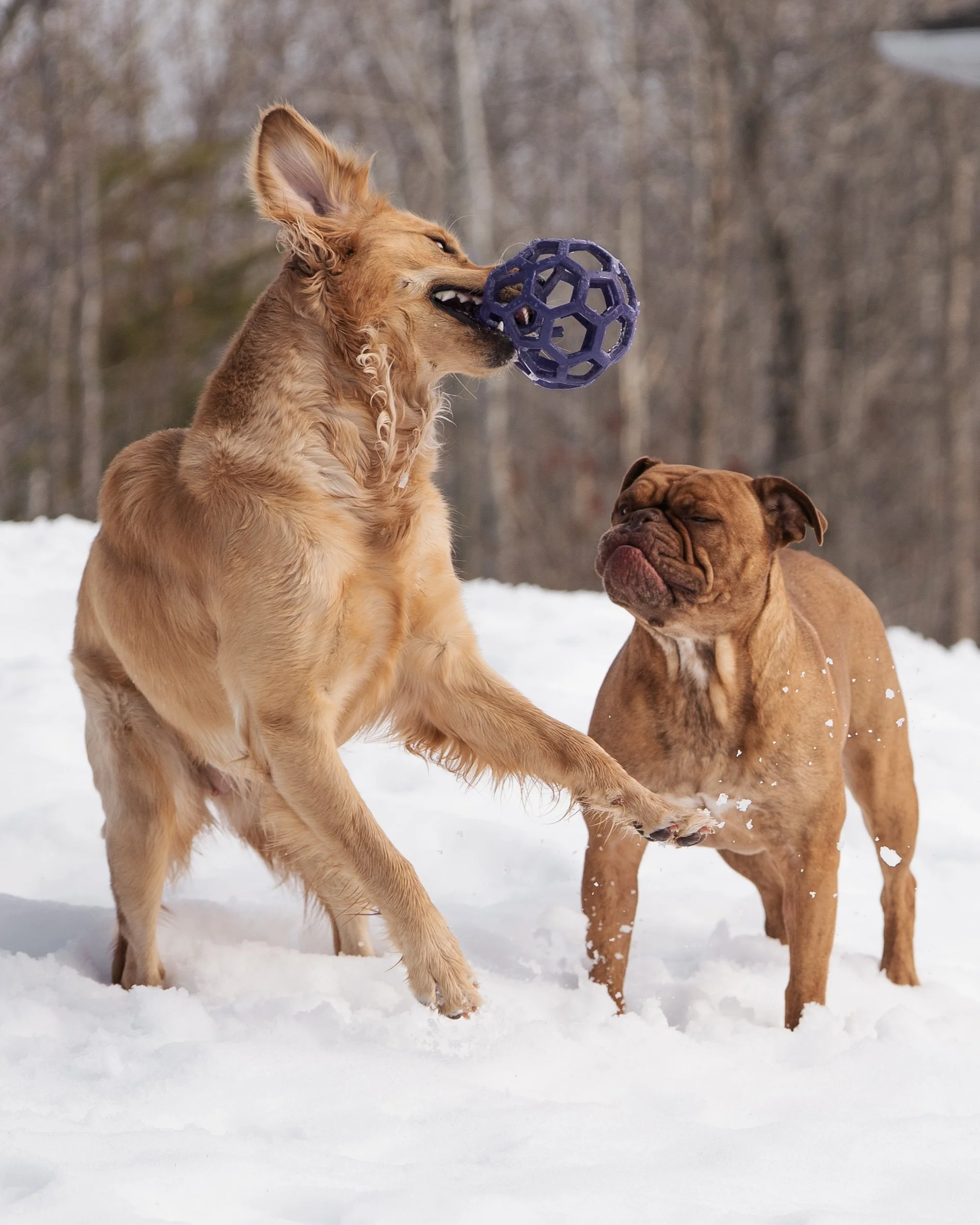
Hazel uses an exaggerated bounce away, lifting the toy and turning her body slightly. Dogs often move away like this when holding a toy while they decide whether to share it, start a game of tug, or keep the toy for themselves.
Play Mouthing
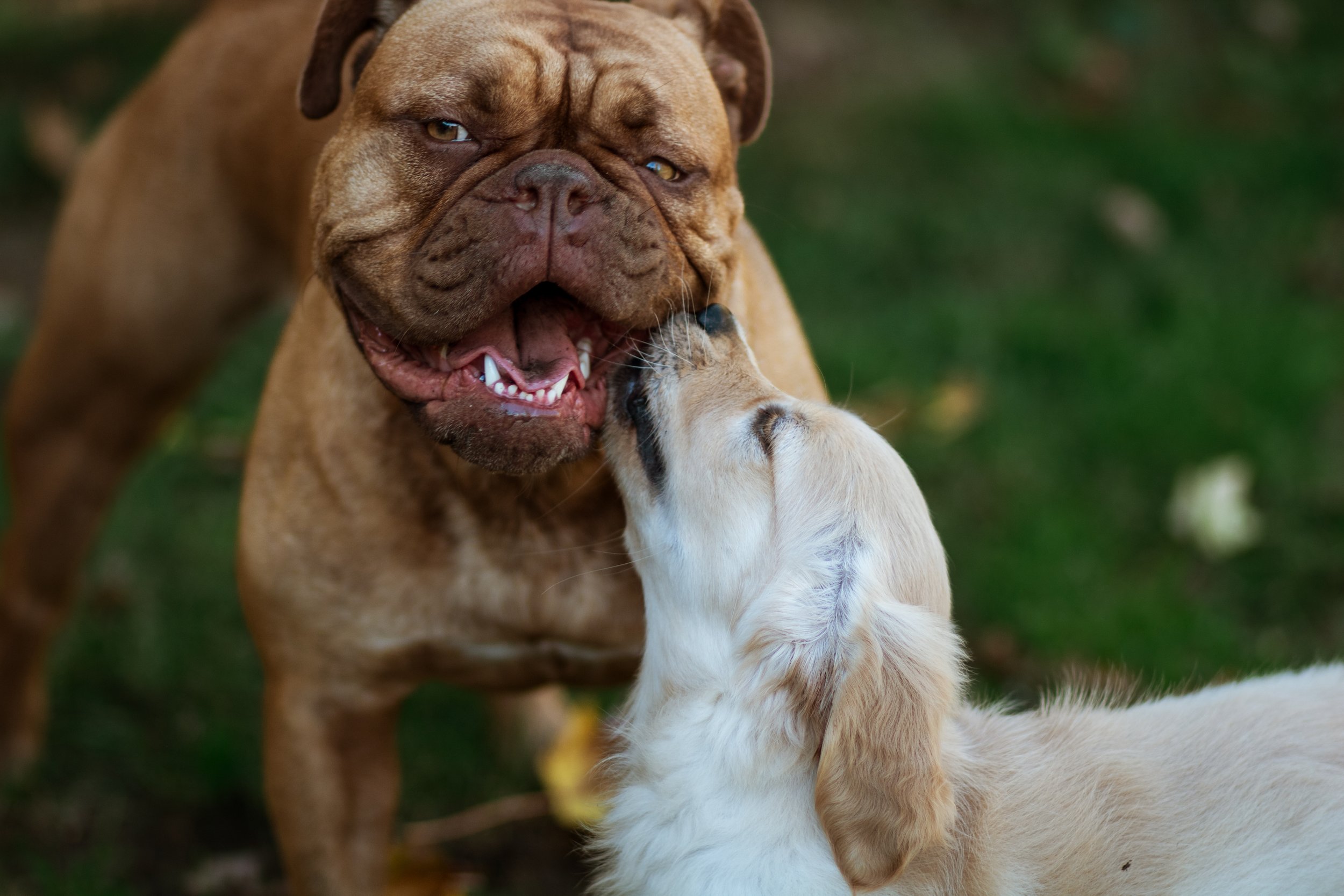
Contact
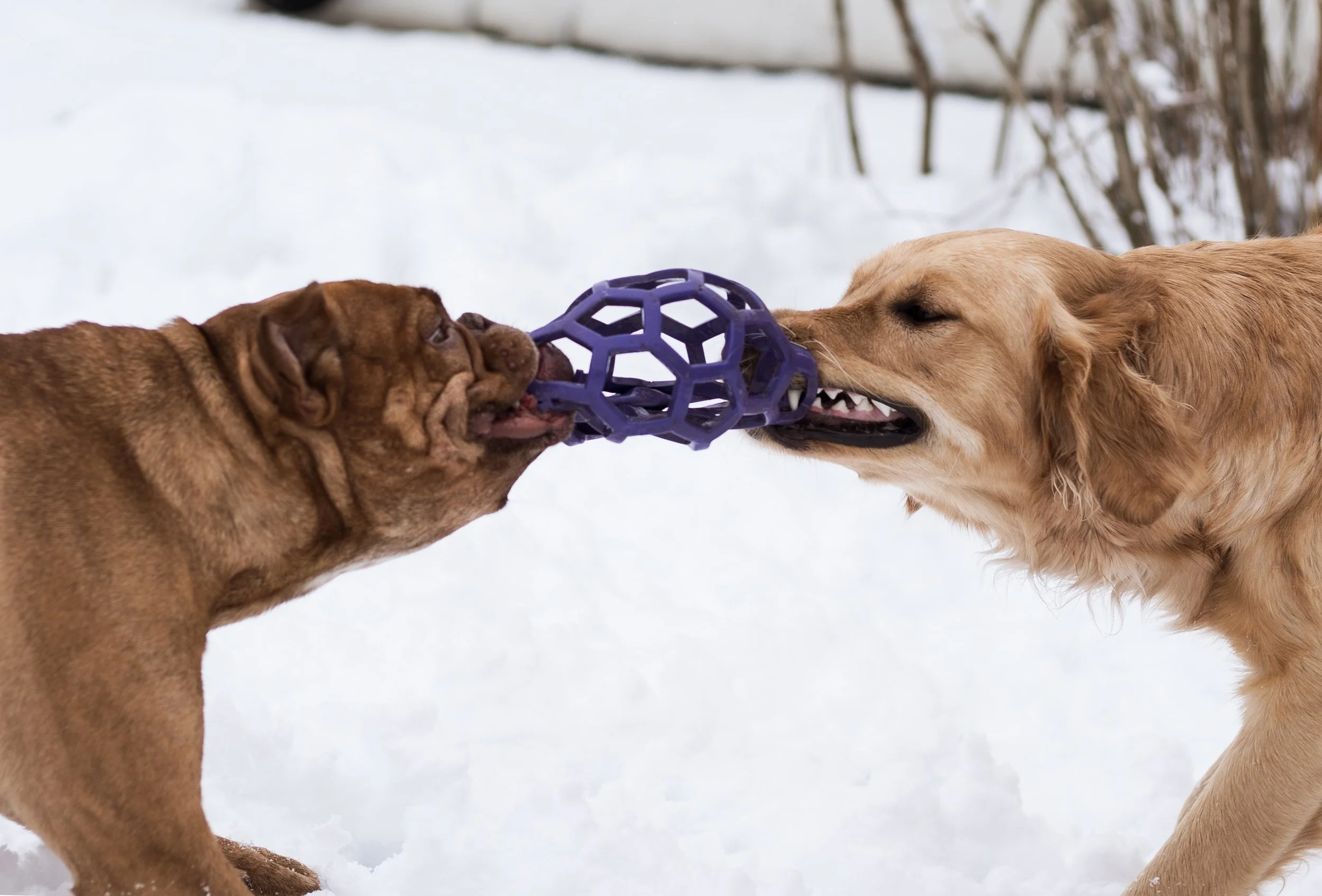
Lucy’s mouth stays relaxed and open, and her body remains loose — signs she’s comfortable with the interaction.
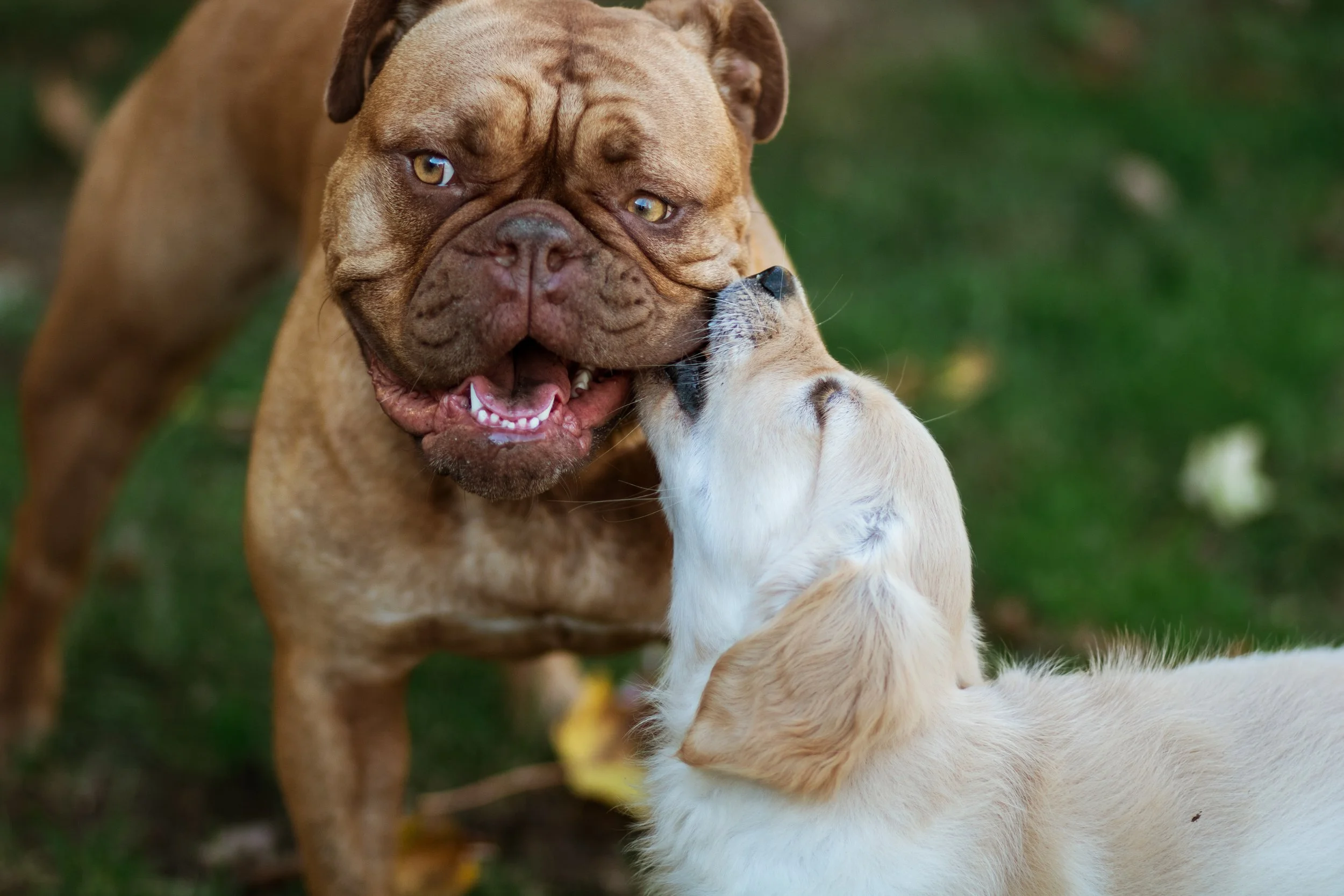
Mouthing
Lucy is still tolerating the contact, but her facial expression changes slightly. Her mouth closes and her eyes narrow a bit — small signals that the pressure is increasing.
Dogs often interact around the mouth during play, grabbing lips, cheeks, ears, or loose skin. The contact itself doesn’t tell us whether an interaction is playful or uncomfortable — the body language that’s happening with it does.
In these photos Hazel gradually escalates the pressure of her mouthing. Lucy tolerates the interaction throughout, but her facial expressions shift slightly as the contact becomes more intense. Her mouth closes, her eyes change, and her head turns away.
As dogs become more aroused during play, movements can become faster, stronger, and more focused. Watching for these subtle changes helps us recognize when the interaction may benefit from a pause or reset.
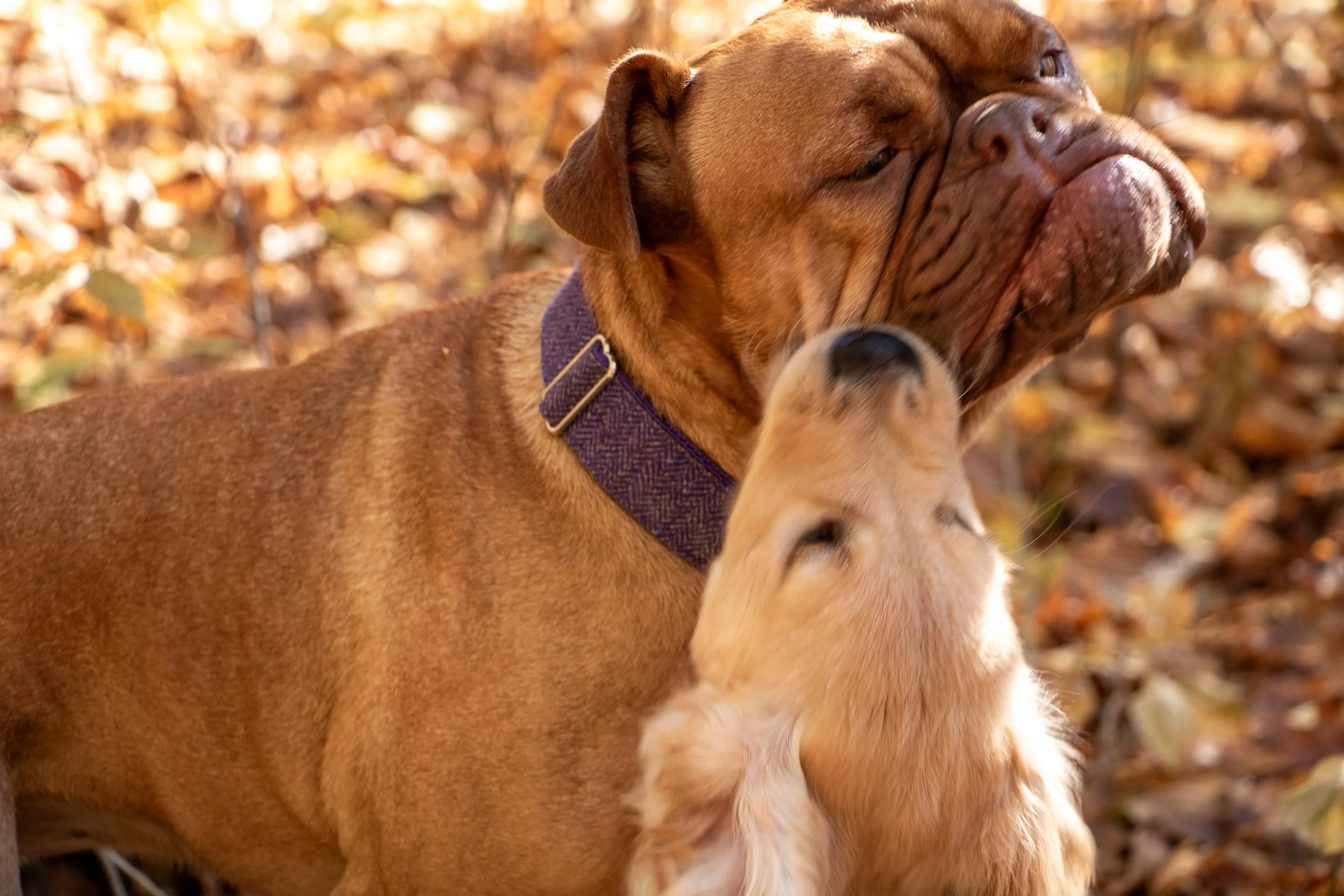
Grip
Hazel now has a stronger hold on Lucy’s jowl. Lucy continues to tolerate the interaction, but her expression shows she isn’t fully enjoying it.
What’s Happening?
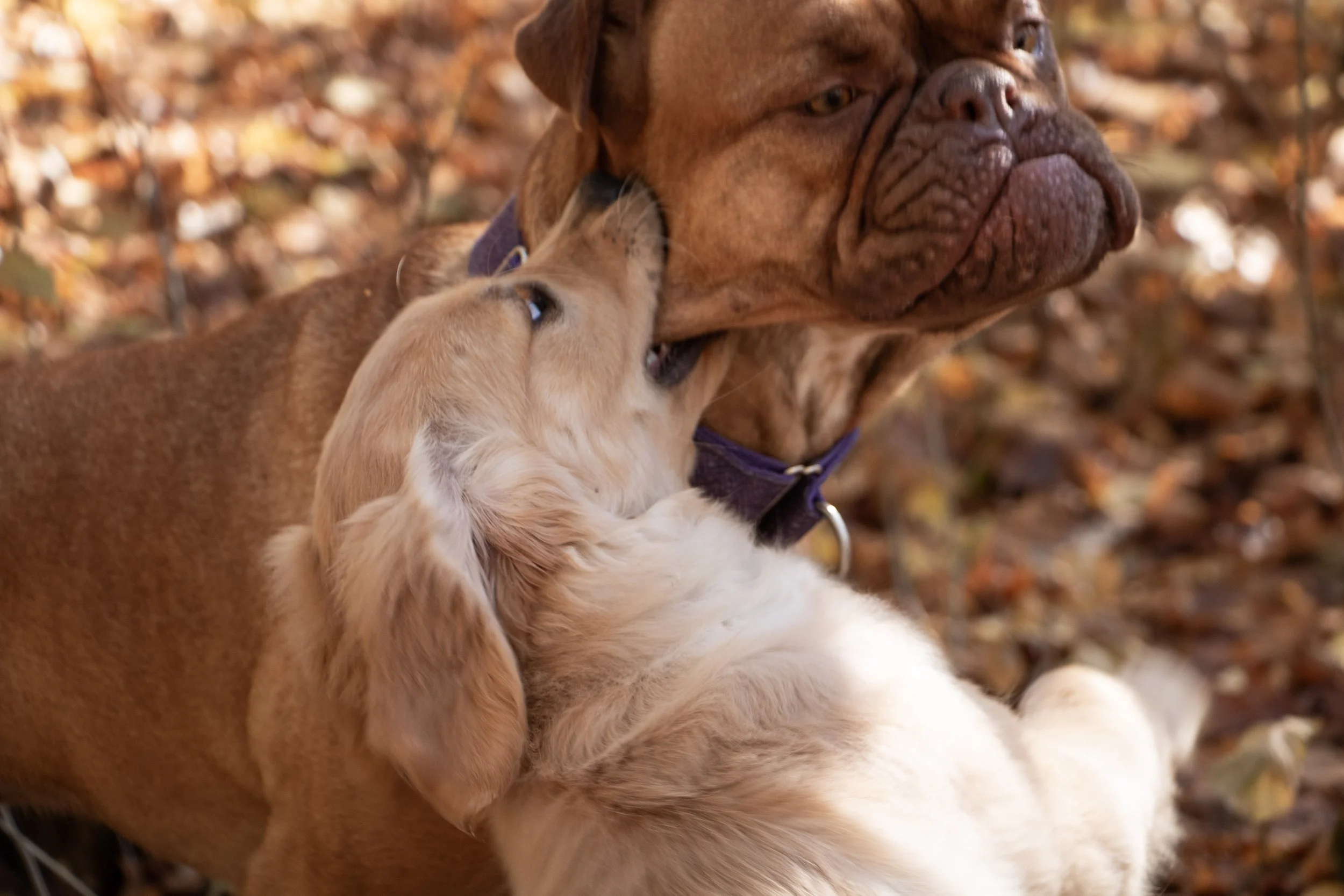
Intensity
As the intensity of the interaction increases. You can see the white of Hazel’s eye as her arousal rises, while Lucy turns slightly away but continues to tolerate the contact.
Play Engagement
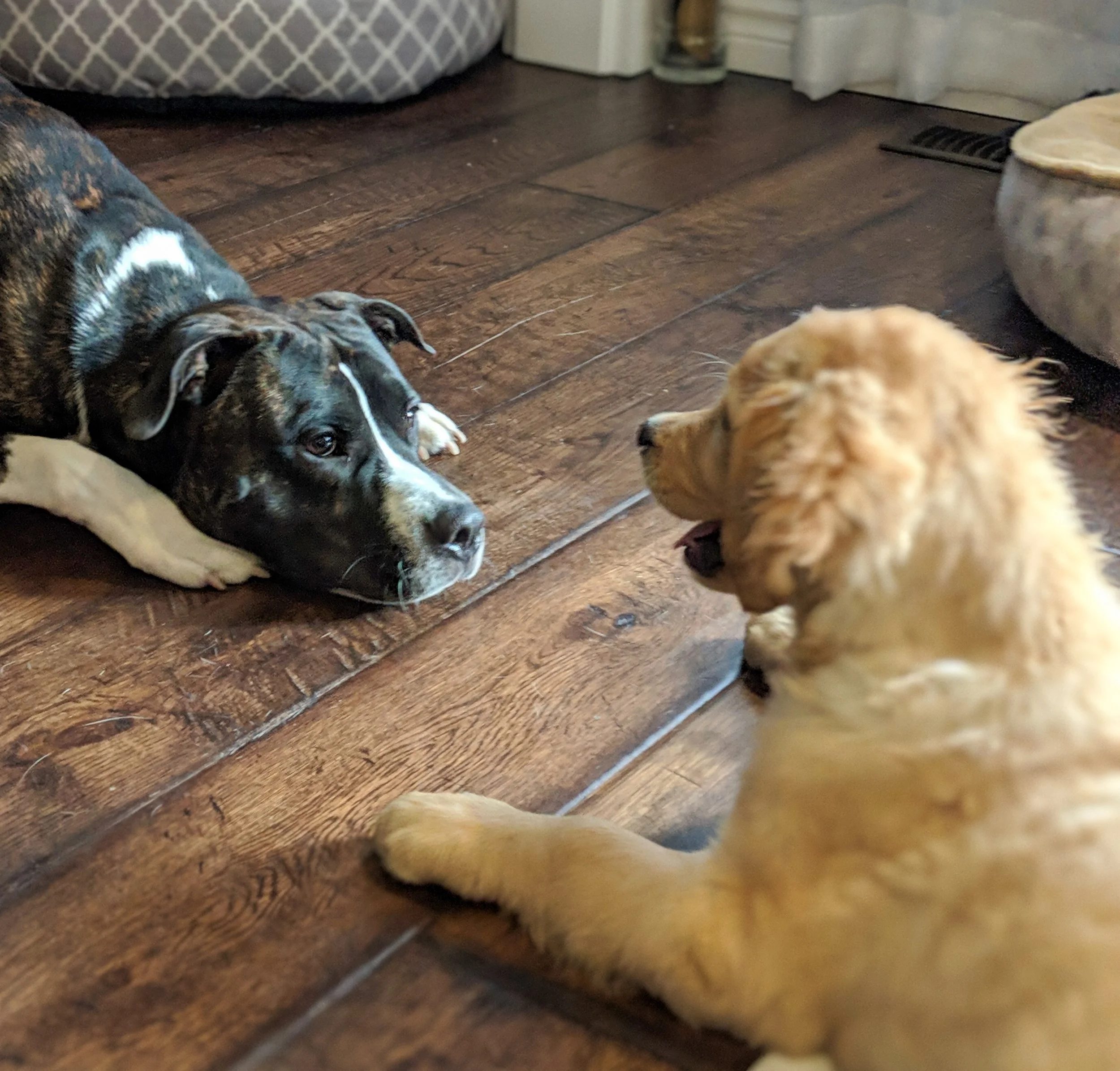
Invitation
The larger dog lowers his front end and raises his hind end in a play bow to invite the puppy to play.
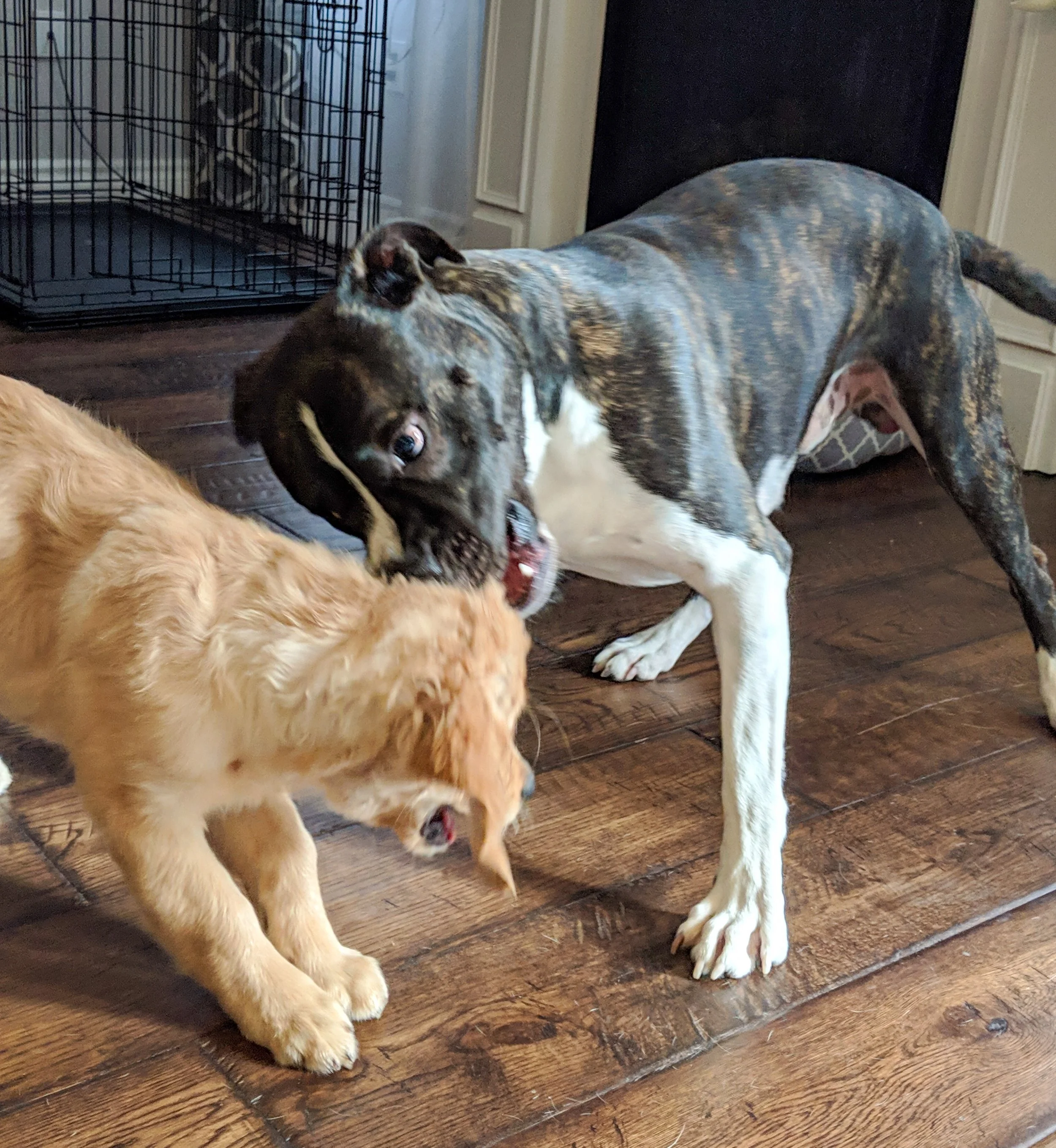
Initiation
The puppy becomes more animated and begins the interaction. Notice the forward movement and open mouths, which are common signals during playful engagement.
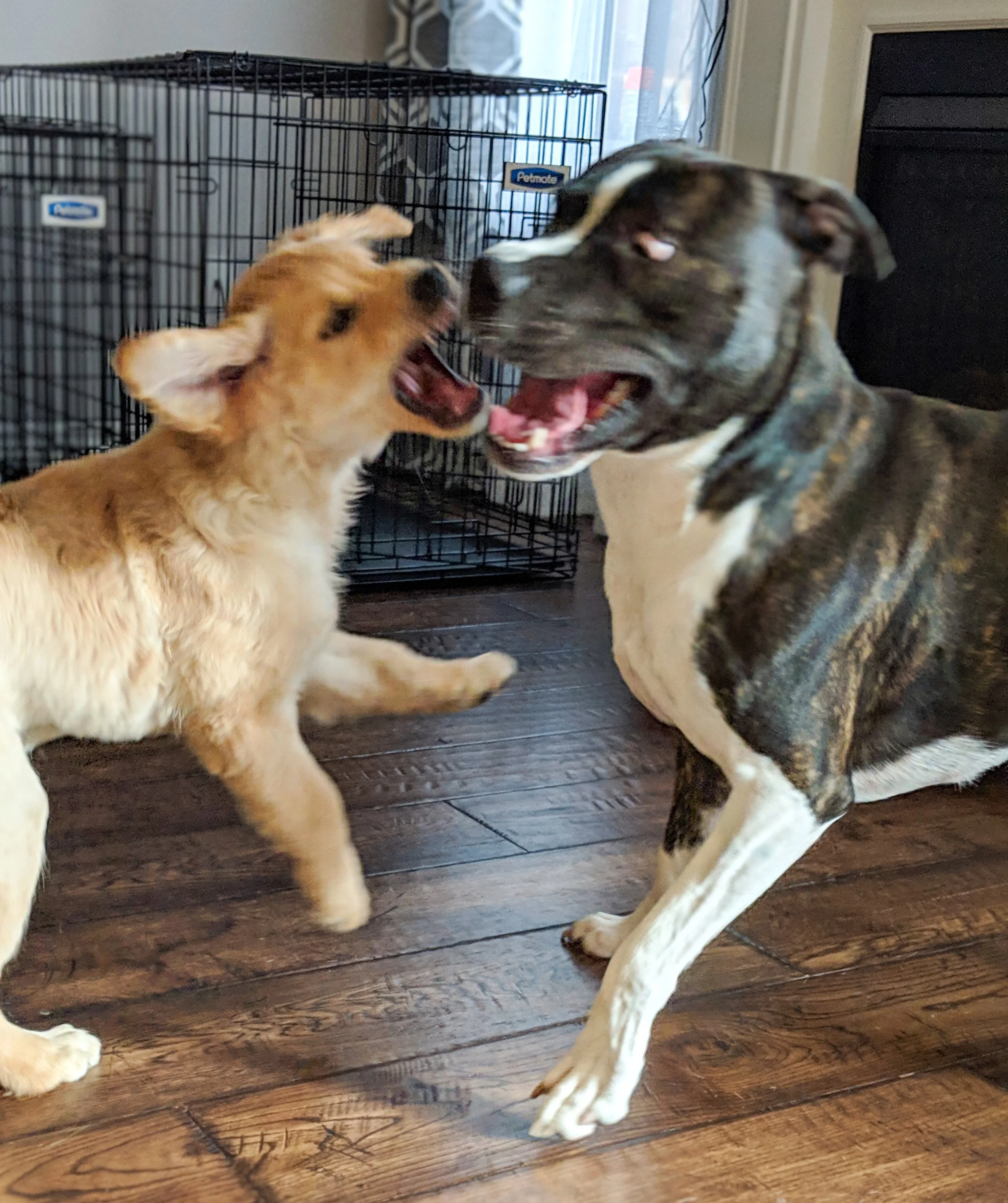
Play
The dogs are actively interacting. Bitey-face play is a common way dogs engage during social play.
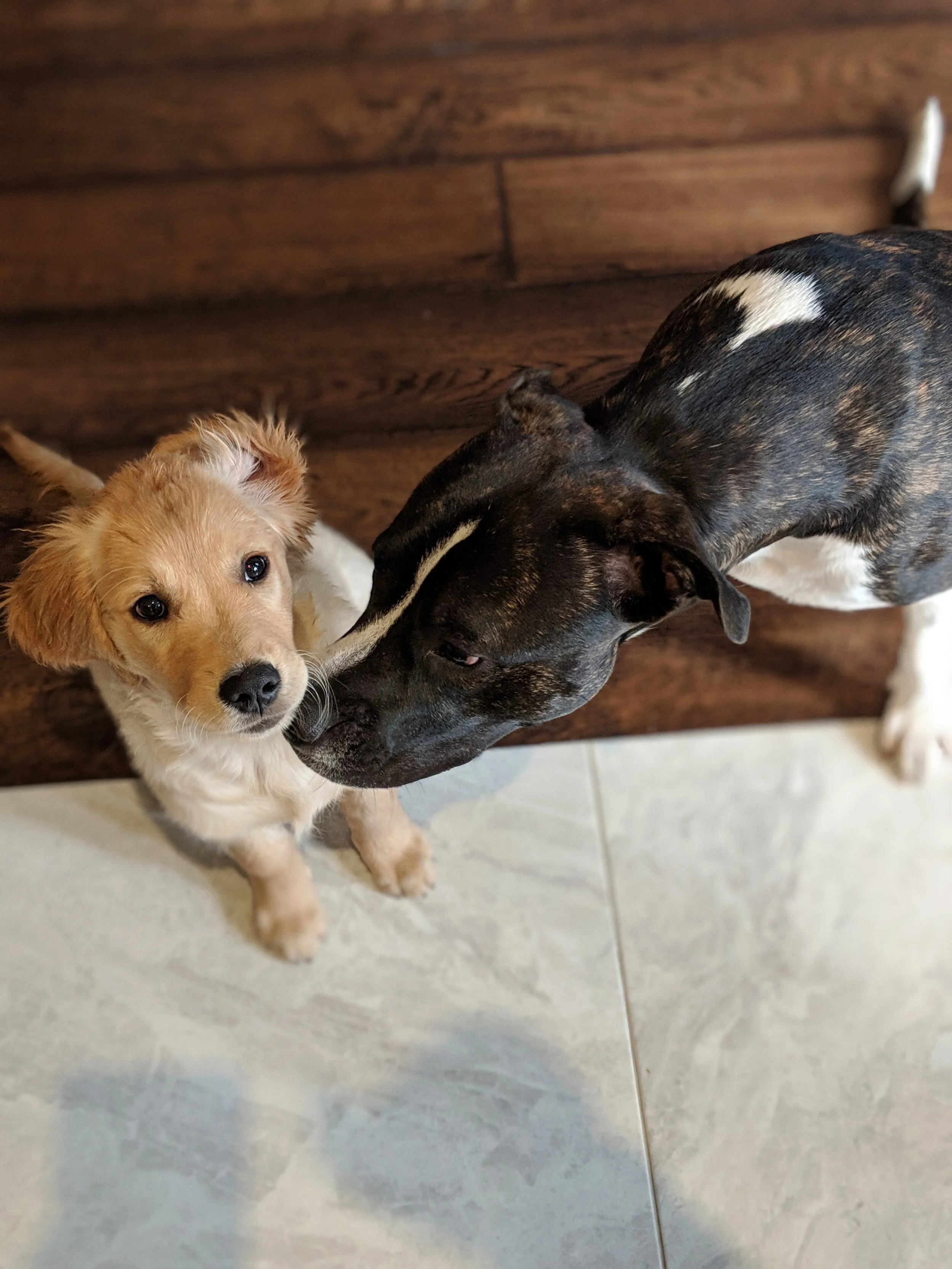
Break
Breaks during play are important for regulation. If puppies or dogs don’t take breaks on their own, humans may need to step in and help pause the interaction.
Play Standing Upright
Chest-to-Chest Contact
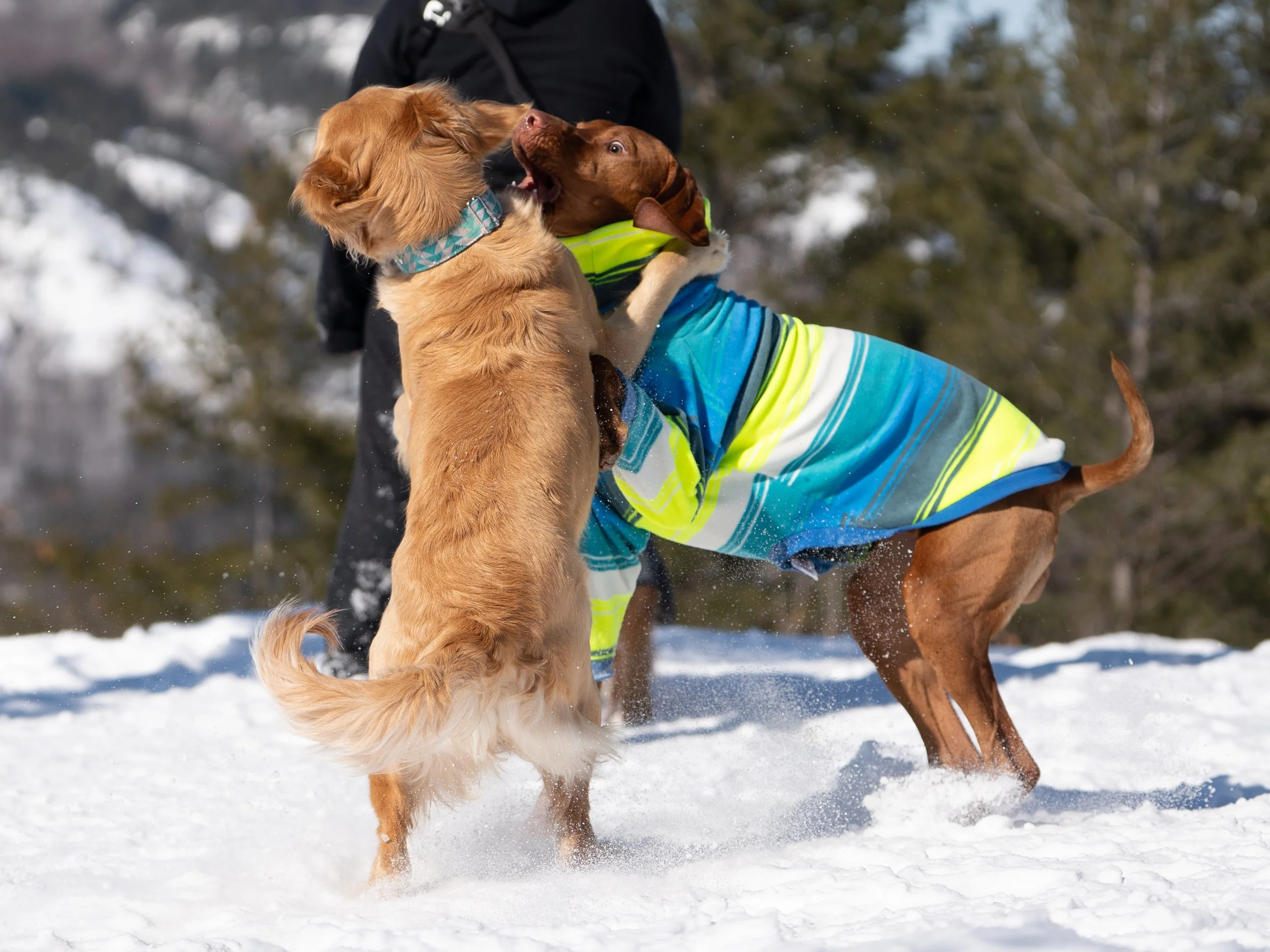
Controlling Space
The interaction stays very close, with mouthy contact around the face and collar area.
Hazel uses her front paws against the other dog’s shoulders to keep him at bay.
Is this healthy play?
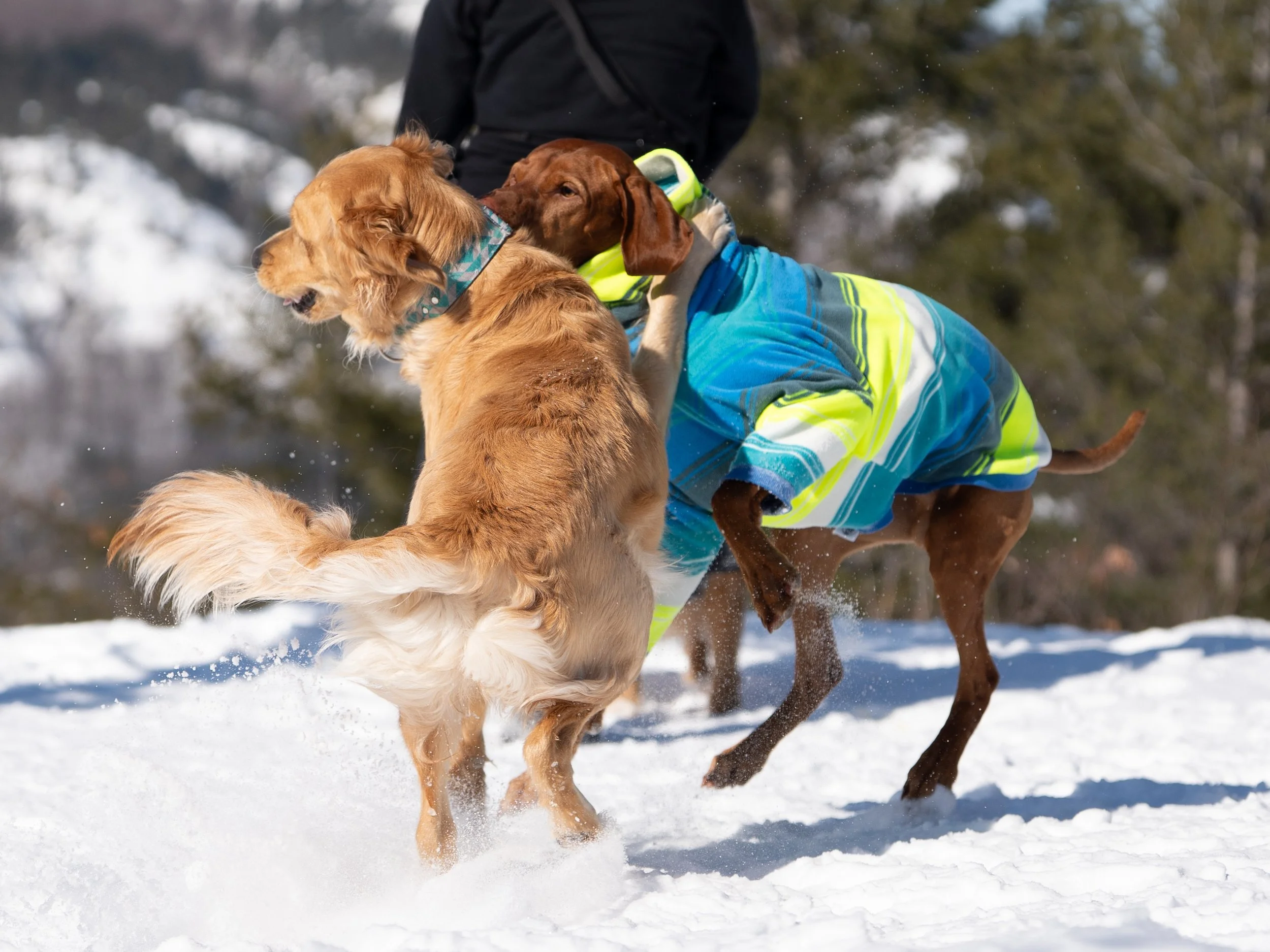
Both dogs come up onto their back legs and make direct chest-to-chest contact.
Hazel’s front paws make contact with his shoulders/neck. She’s turning away from him.
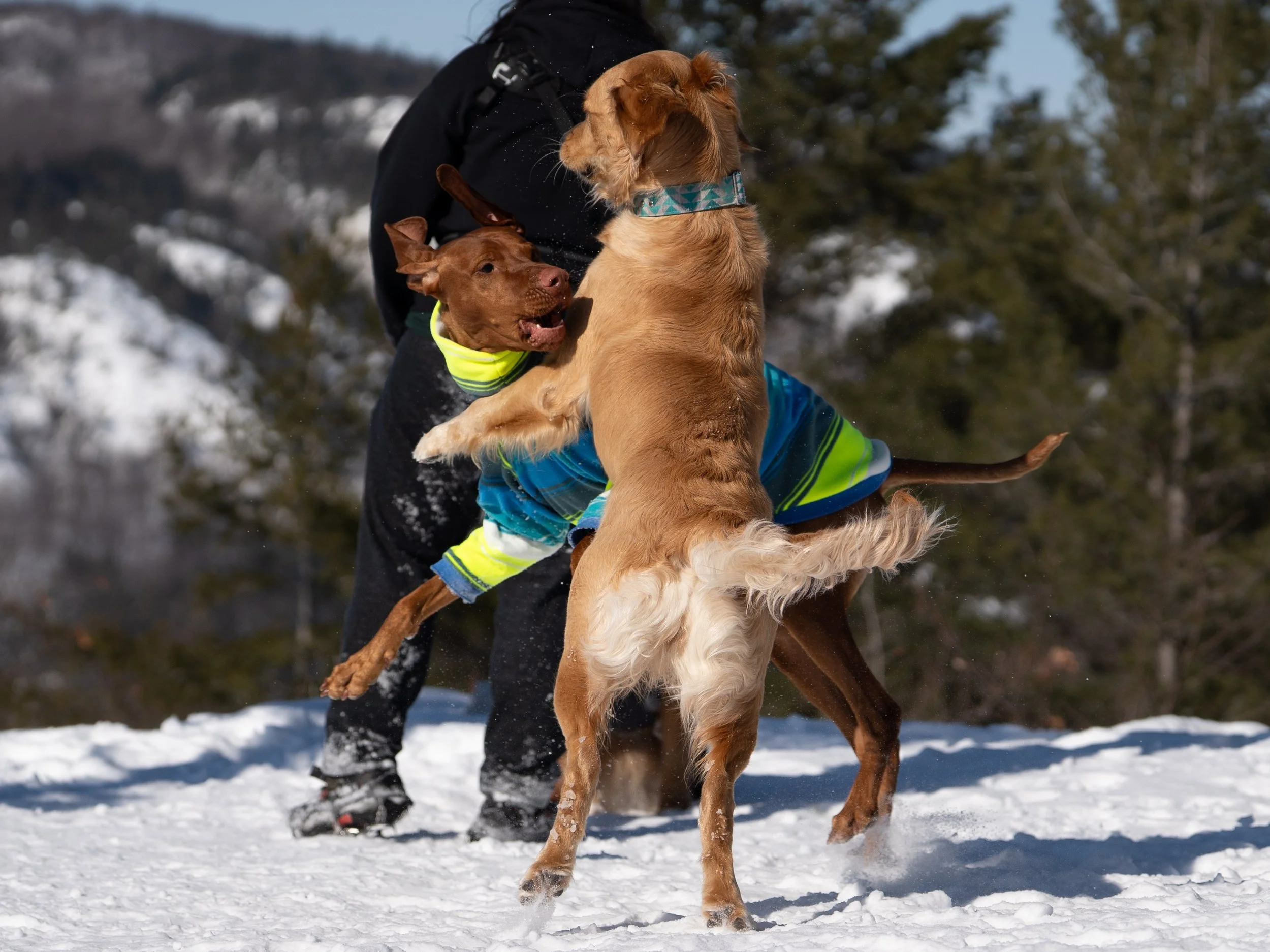
Tension & Orientation
Hazel now turns to face him, body is stiff, mouth tense. She holds her position as she manages the interaction.
More often than not, this type of upright play isn’t considered “good” play. Coming up onto the back legs with front paws on the shoulders tends to happen as arousal increases. It’s intense and physically demanding, with less space for either dog to move or disengage.
In this interaction, Hazel is doing more of the work. She uses her body, front paws, and positioning to manage distance and control how close the other dog gets. You can see her shifting between turning away and facing him — adjusting moment by moment to keep the interaction from escalating.
The other dog continues to move in and maintain close contact, which increases the intensity and makes it harder for Hazel to step out of the interaction.
Hazel is still participating — but her body language shows she’s not having fun.
This kind of interaction can be social and appropriate, but only when it’s brief, both dogs are equally engaged, taking turns, and able to move in and out of it freely.
What matters isn’t just that the dogs are playing — it’s how much effort each dog is putting into keeping that play comfortable.
What Happens Next
Keeping Him At Bay
Intensity is still high as they come out of upright play.
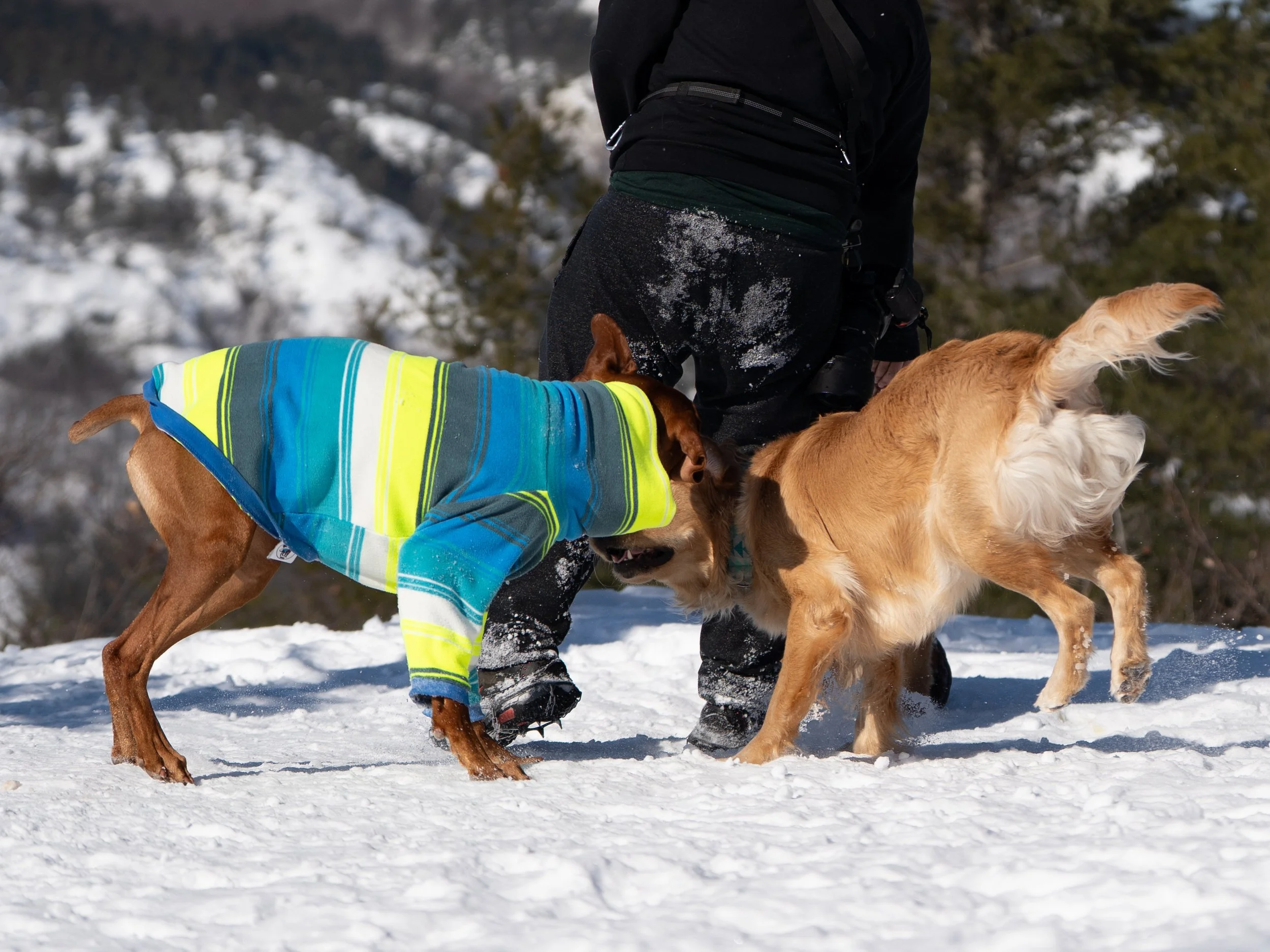
Moving Away
Walter stays close, continuing to pursue Hazel with face and neck mouthing.
Hazel is trying to create space by moving her hind end away.
What’s Happening?
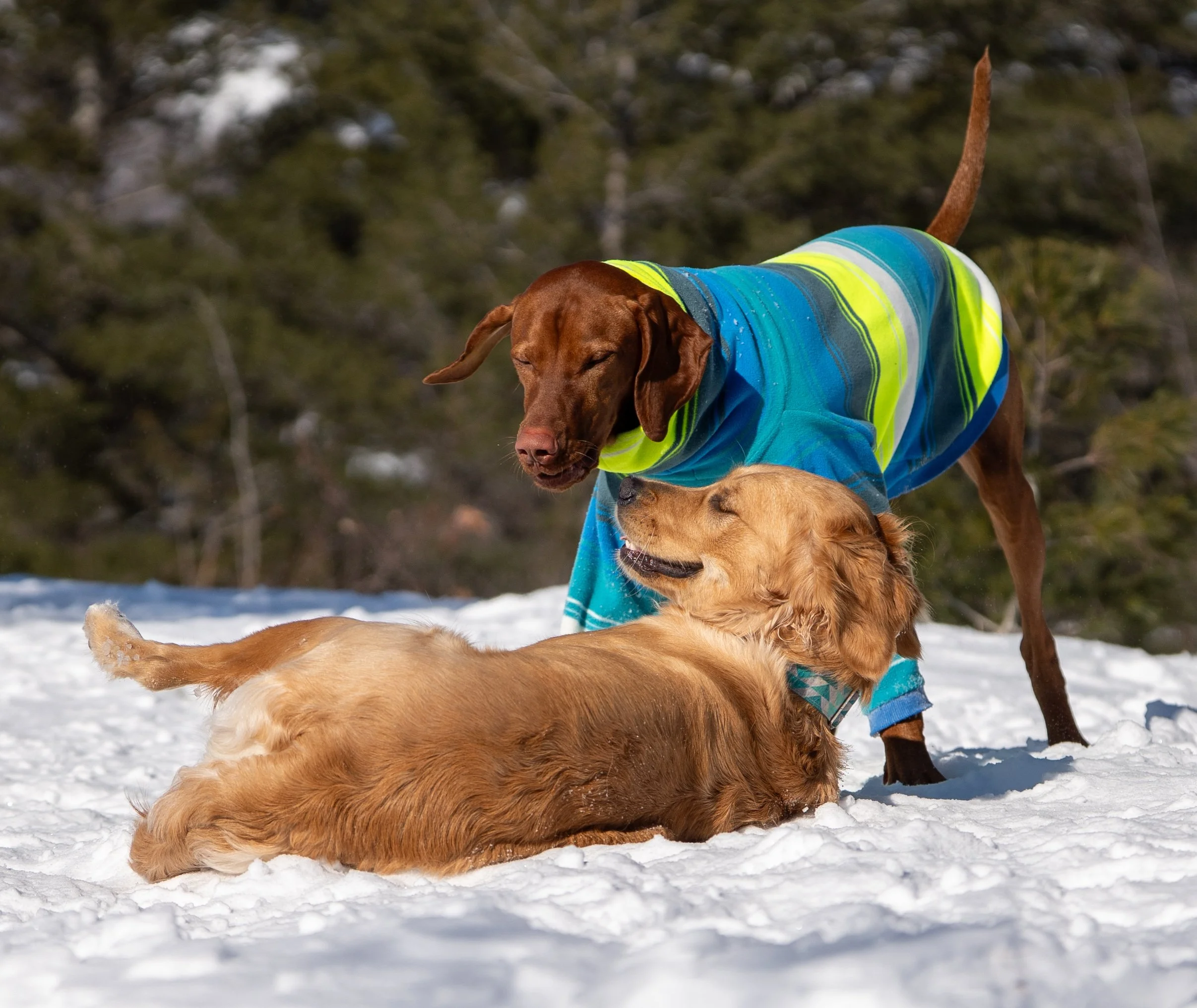
Rolling Over
Finally Hazel rolls onto her back and turns her away— a clear attempt to reduce pressure and ask for space.
This is how that interaction continues— and how we can see that this is not balanced play.
The interaction becomes more about maintaining contact than taking turns.
The Vizsla keeps pursuing Hazel, his focus on her face and neck.
Hazel starts trying to create space by hopping her hind end away and keeping her head low to avoid that contact.
By the final frame, Hazel rolls onto her back.
If you’re into the dominance stuff, you’re probably thinking Hazel is being “submissive.”
While that might be technically true in a very broad sense, it’s an oversimplification that puts him in a “dominant” position — with aggressive undertones. Not helpful.
A dog rolling onto its back during an interaction like this is a distance-increasing behaviour used to de-escalate and signal that they want space.
In healthy play, this is typically where you’d see a pause or a role reversal.
Downloadable resources to support your understanding of dog-to-dog communication and play behaviour.
Printables & Training Tools
Healthy Play
A two-page visual guide outlining what healthy play looks like, including role reversals, pauses, self-handicapping, and how dogs communicate consent and comfort during interactions.
Puppy-Adult Dog Play
A short guide to how puppies learn social skills through interactions with adult dogs — including what adult dogs can (and can’t) teach, what puppies are learning in real time, and the role humans play in supporting safe, flexible interactions.