Bite-Sized Behaviour
Welcome to Bite-Sized Behaviour — real-life behaviour insights you can watch in just a few minutes.
These clips and images highlight everyday moments that reveal so much about how dogs communicate, respond to their environment, and navigate the world around them.
Think of them as snack-sized lessons — easy to digest, practical to use, and focused on the small details that make a big difference.
Whether you’ve got two minutes or ten, these videos are designed to give you something useful right away.
Body Language In Context
Coming across scary or unexpected things in the environment.
Even accidental leash corrections cause a stress response.
Ella is both excited and nervous to greet my Dad. Conflicting emotion can cause mild stress.
This is what attention seeking or demand barking looks like.
Hazel is super excited to see her favourite person at her favourite place but she starts frantically sniffing?
I turn the start of a walk into whole ordeal for Lucy.
Guarding High-Value Items
Hazel hit the jackpot on a hike when she found this piece of deer hide.
Nothing dramatic is happening here — but there’s actually a lot being communicated.
But if you slow it down, you can see clear changes in her eyes, face, and posture that tell you exactly how she feels about it.
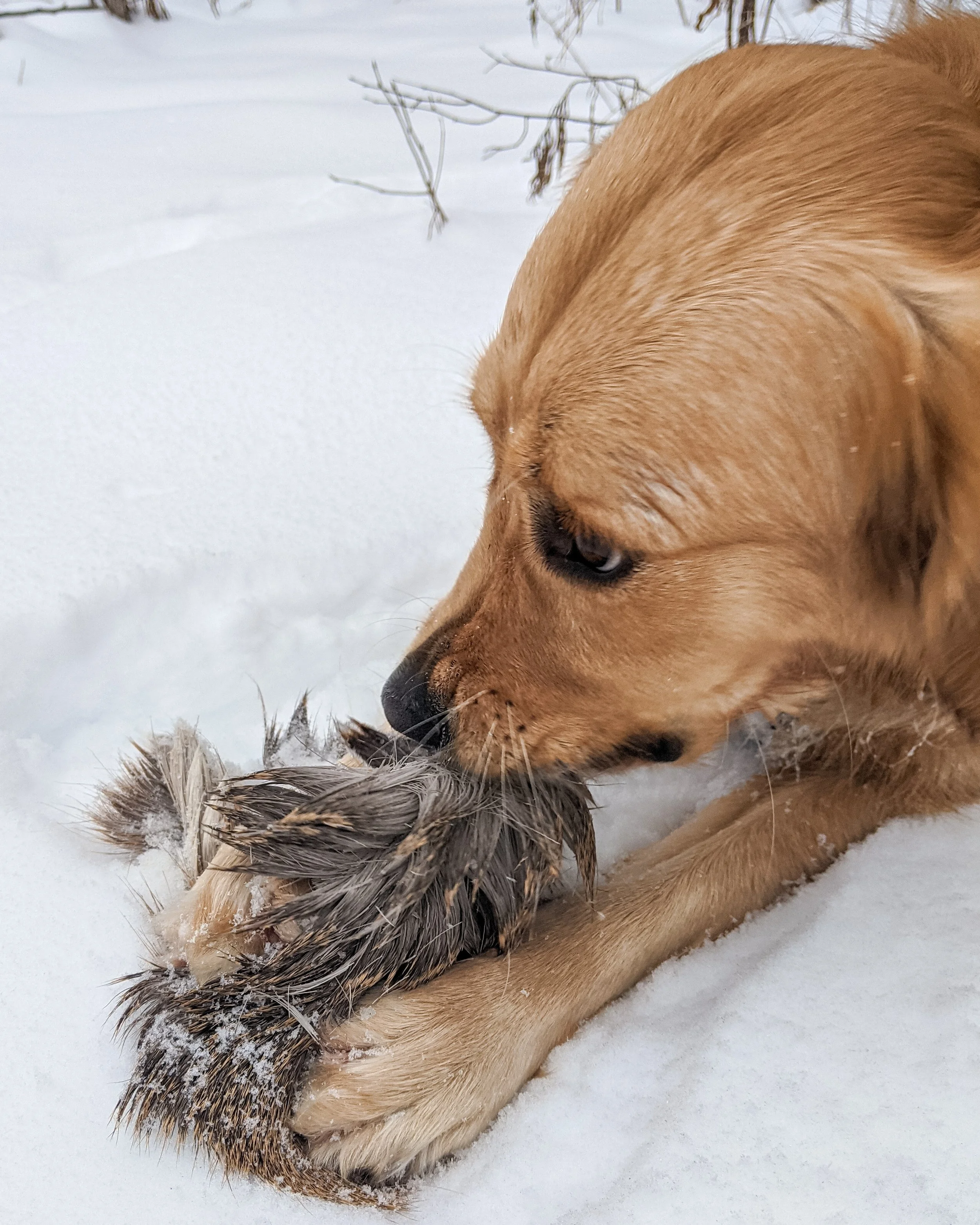
Whale Eye
You can see a crescent of white as her head lowers while her eyes stay fixed. This often appears when a dog is holding something of value and someone appears in the environment.
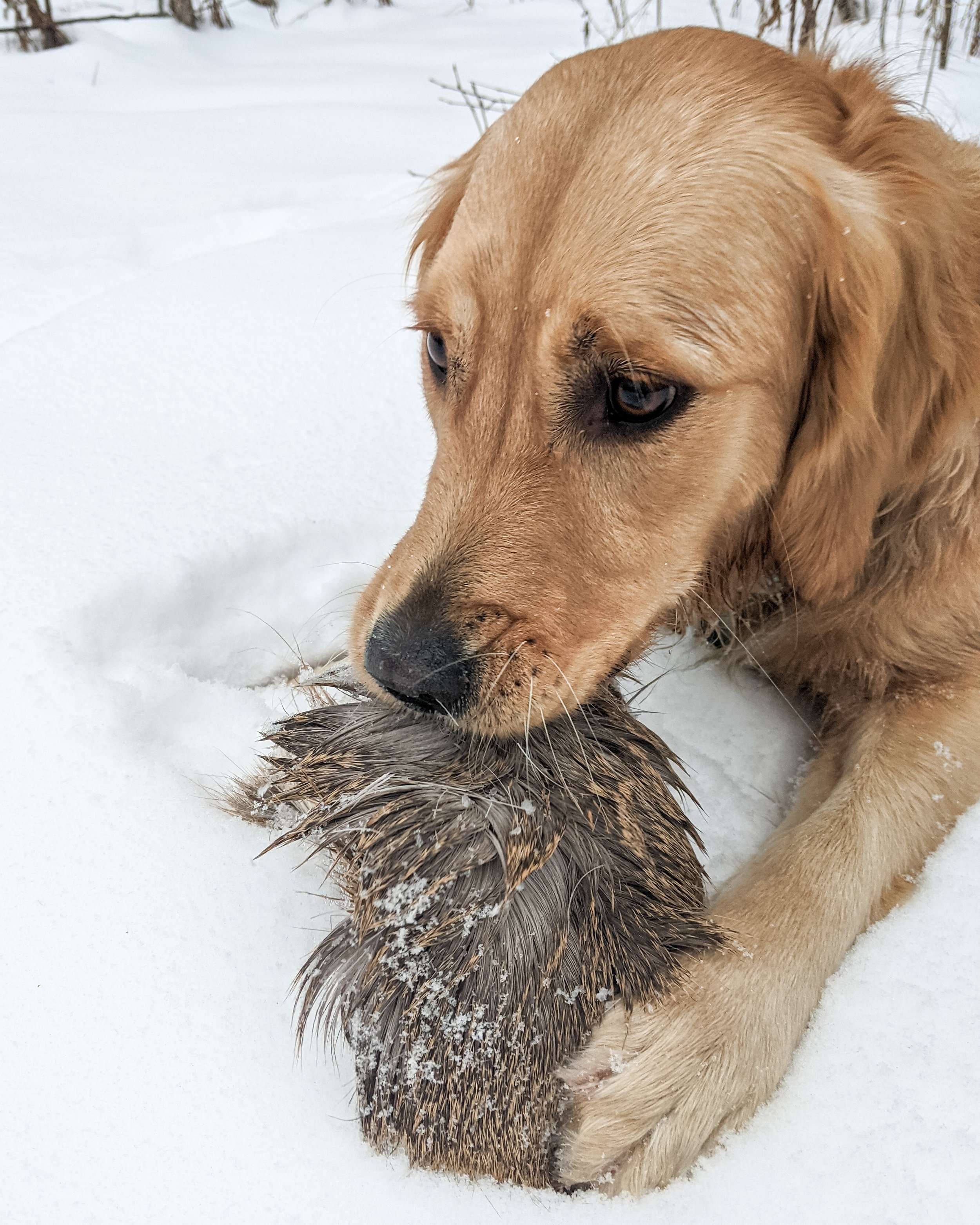
Hard Eye
Her eyes become hard — direct, steady, and intense. Her body is still, her mouth stays closed on the item, and there’s visible tension through her face.
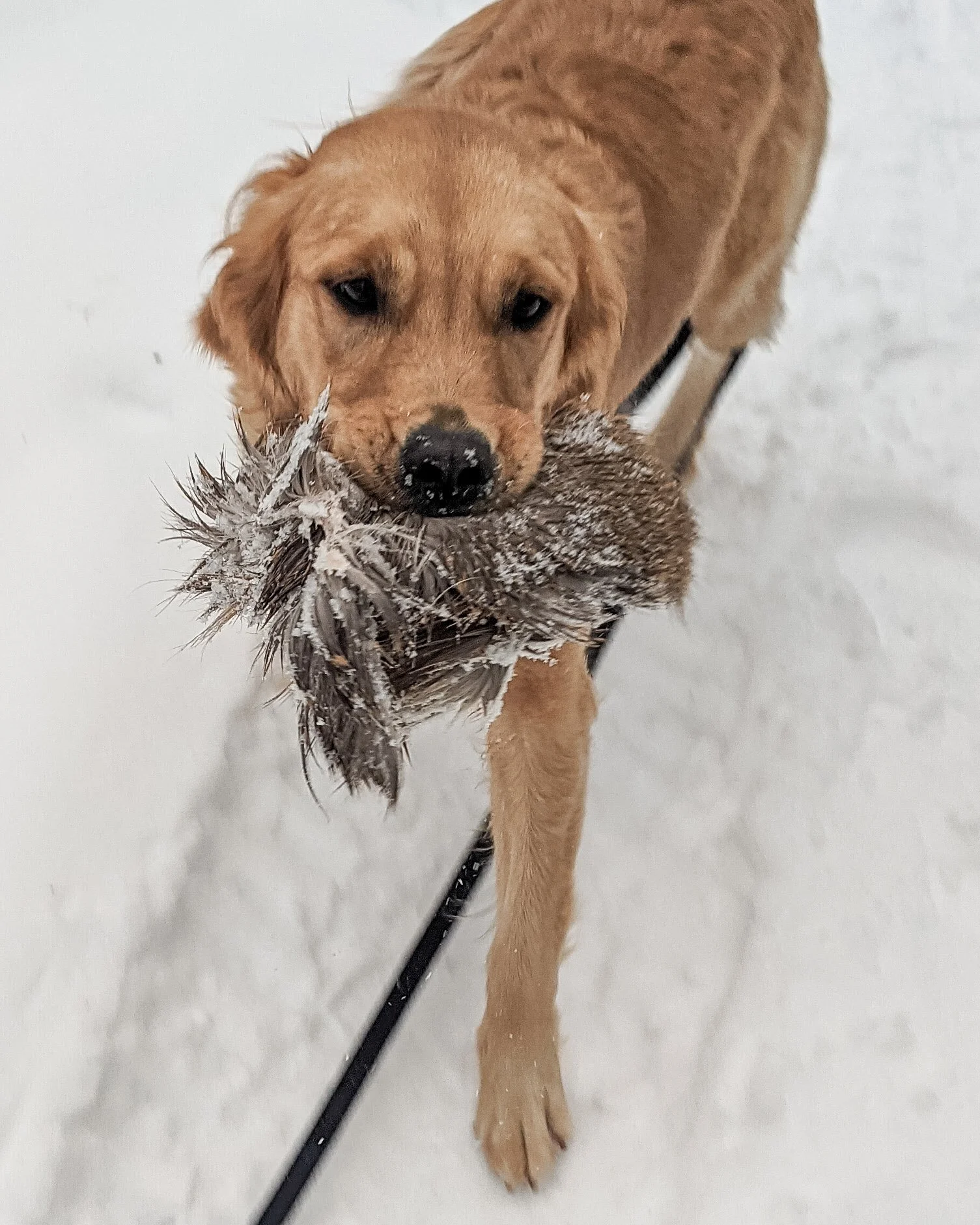
Possession
You can see tension in her face — narrowed eyes, a firm grip on the item, and ears held back. This isn’t relaxed carrying; she’s maintaining possession while staying aware of her surroundings.
In this clip, Hazel is warning Ella that she does not want her to approach with a hard look.
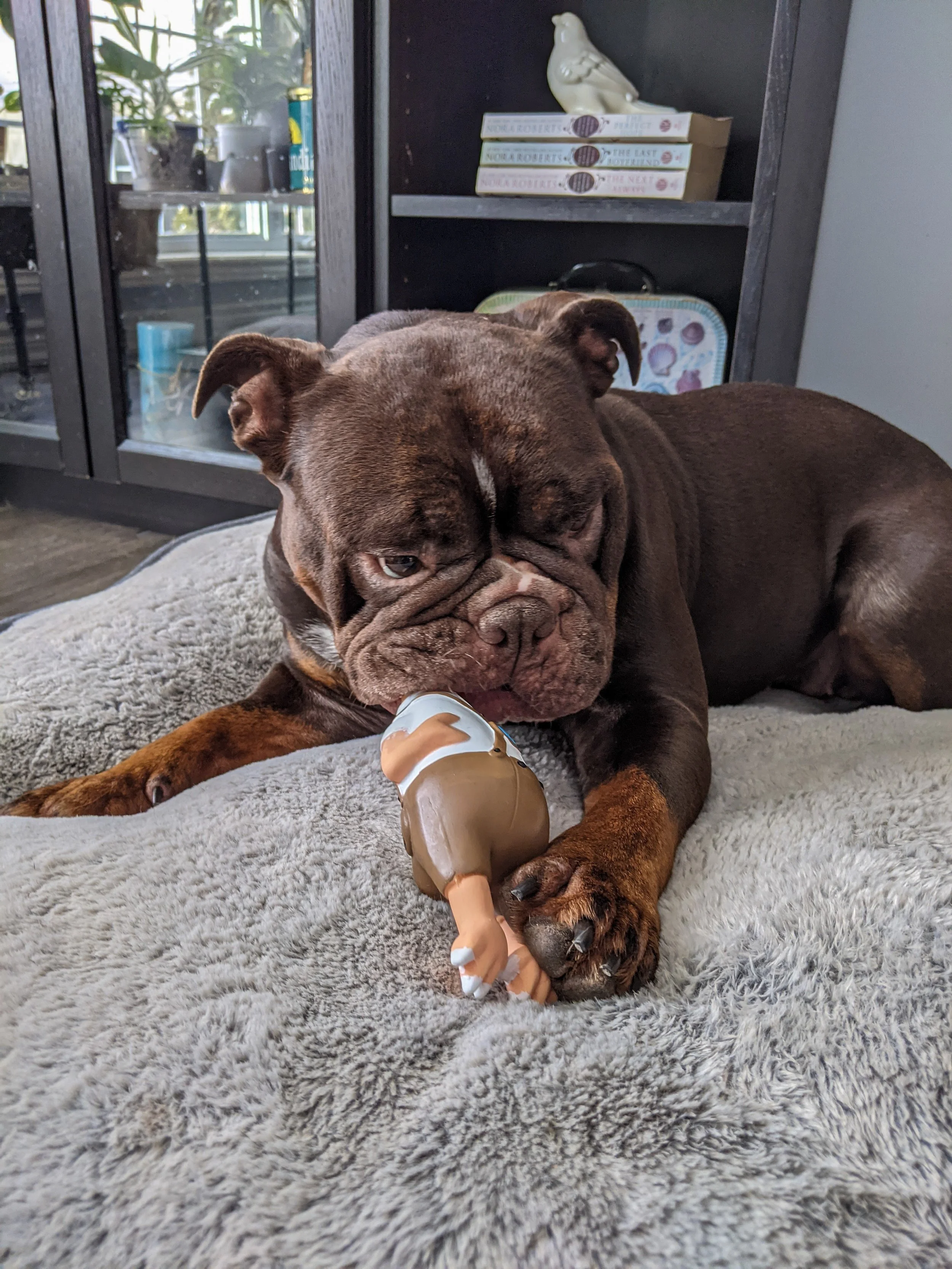
Dogs sometimes position their body around an item they value while keeping an eye on what’s happening nearby.
You might see:
• the item held between the front paws
• the head lowered over the object
• the dog monitoring nearby movement
This posture helps the dog maintain possession of the item and acts as a distance-increasing signal, meaning “please do not approach”.
Shake Offs
A shake off helps cut the tension during social encounters.
After back-to-back scary and exciting moments, this nervous puppy shakes off the residual big feelings.
Lucy investigates Penelope’s unfamiliar scents after a vet visit.
Hazel and Hank are playing while Ella sits close by. When Hazel moves away, she shakes off — a common transition signal that can show release of tension, arousal, or social pressure after an interaction.
Fear & Avoidance Behaviours
Sometimes you might see more than one fear response in the same encounter.
In this clip you’ll see both freeze and flight behaviour— along with out stress signals.
Slow, cautious movement. Lowered body. Deliberate steps.
Creeping often happens when a dog is unsure and trying to approach while still staying safe.
Why Do Dogs Do That?
A closer look at everyday dog behaviours and why they happen.
The behaviour might look the same, but the reason behind it can be different.
Rolling
Dogs roll for a variety of reasons — from interacting with scent, to regulating after excitement, to creating space during social interactions.
The behaviour can look the same, but the function depends on the context.